
Technical Support & Resources
Information provided in the product description is from published literature. Due to the nature of scientific experimentation, your results (e.g., selectivity and effective concentrations) or specific application for this product may differ. If you have questions about how this product fits your application, please contact our technical support staff.
Visit our FAQ
Contact Us
Toll Free Phone (USA and Canada Only): (888) 526-5351
Direct Phone: (734) 975-3888
Product Categories

Technical Information
- Dihydroquinine
- NSC 41799
Shipping & Storage Information
Recommended Products
Certificates of Analysis & Batch Specific Data
Provide batch numbers separated by commas to download or request available product inserts, QC sheets, certificates of analysis, data packs, and GC-MS data.
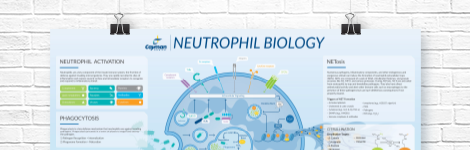
Neutrophil Biology Wall Poster
Explore how neutrophils shape the immune response in health and disease. This poster highlights neutrophil pathogen defense mechanisms, including phagocytosis, degranulation, and NETosis, as well as neutrophil roles in inflammation and NET-associated pathologies.
DOWNLOAD NOWProduct Description
Hydroquinine is a cinchona alkaloid that has been found in Cinchona bark and has diverse biological activities.1,2,3,4 It is active against clinical isolates of multidrug-resistant P. aeruginosa (MICs = 2.5 mg/ml for all) and P. knowlesi.2,3 Hydroquinine inhibits potassium currents in Xenopus oocytes expressing the human sodium-activated potassium channel KNa1.1 (IC50 = 93.9 µM) in an inside-out patch-clamp assay and decreases seizure severity in a mouse model of spontaneous epilepsy induced by mutant KCNT1, the gene encoding KNa1.1.4 It has been used as a building block in the synthesis of polymers for the delivery of plasmid DNA in vitro.5 Formulations containing hydroquinine have been used in the treatment of muscle cramps.
WARNING This product is not for human or veterinary use.
References & Product Citations
1. Quantitative determination of major alaloids in Cinchona bark by supercritical fluid chromatography. J. Chromatogr. A 1554, 117-122 (2018).
2. Hydroquinine inhibits the growth of multidrug-
3. Chloroquine and dihydroquinine. In vitro studies of their antimalarial effect upon Plasmodium knowlesi. J. Pharmacol. Exp. Ther. 164(2), 380-386 (1968).
4. Electrophysiological characterization of human KCNT1 channel modulators and the therapeutic potential of hydroquinine and tipepidine in KCNT1 mutation-
5. Enhancing pDNA delivery with hydroquinine polymers by modulating structure and composition. JACS Au. 3(7), 1876-1889 (2023).
Contact Info
Cayman Chemical1180 East Ellsworth RoadAnn Arbor, Michigan 48108 USAToll Free: (800) 364-9897(USA and Canada only)Fax: (734) 971-3640


