
Technical Support & Resources
Visit our FAQ
Contact Us
Toll Free Phone (USA and Canada Only): (888) 526-5351
Direct Phone: (734) 975-3888
Product Categories
Product Type
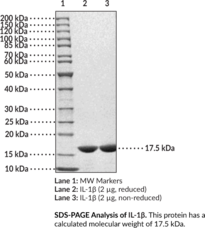
Technical Information
- Catabolin
- IL-1F2
Shipping & Storage Information
Recommended Products
Certificates of Analysis & Batch Specific Data
Provide batch numbers separated by commas to download or request available product inserts, QC sheets, certificates of analysis, data packs, and GC-MS data.
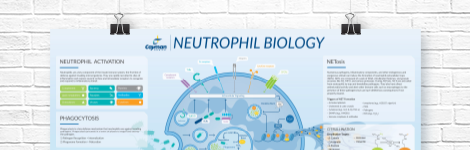
Neutrophil Biology Wall Poster
Explore how neutrophils shape the immune response in health and disease. This poster highlights neutrophil pathogen defense mechanisms, including phagocytosis, degranulation, and NETosis, as well as neutrophil roles in inflammation and NET-associated pathologies.
DOWNLOAD NOWProduct Description
Interleukin-1β (IL-1β) is a cytokine and member of the IL-1 family of proteins.1 It is produced as an inactive cytosolic pro-cytokine, which is cleaved by caspase-1 into mature IL-1β.2 IL-1β is found primarily in mononuclear cells where it can be secreted by immune cells during pyroptosis via the NOD-like receptor protein 3 (NLRP3) inflammasome pathway following its activation by bacterial and viral pathogens.3,4 IL-1β binds to IL-1 receptor 1 (IL-1R1), which is expressed in a variety of cells, including T cells, fibroblasts, and keratinocytes, and IL-1R2, which is expressed primarily in B cells and neutrophils with IL-1R3 as a co-receptor.2,5 Upon binding to its receptors, IL-1β induces kinase signaling cascades leading to the induction of NF-κB transcriptional activity and modulation of immune and inflammatory responses.1,2,6 IL-1β activity can be inhibited by the endogenous protein IL-1R antagonist (IL-1Ra), which inhibits IL-1β binding by preventing IL-1R1 interaction with its co-receptor IL-1R3.2
WARNING This product is not for human or veterinary use.
References & Product Citations
1. Overview of the IL-
2. The IL-
3. Caspase-
4. Inflammasomes bridge signalling between pathogen identification and the immune response. Drugs Today (Barc). 45(Suppl. B), 105-112 (2009).
5. Immunohistochemical analysis of interleukin-
6. NF-
Contact Info
Cayman Chemical1180 East Ellsworth RoadAnn Arbor, Michigan 48108 USAToll Free: (800) 364-9897(USA and Canada only)Fax: (734) 971-3640


