
Features
- Study modulators of efferocytosis, apoptosis, pro-resolving mediators, and cross-presentation
- Visualize effector (phagocytic) cells and bait (apoptotic) cells simultaneously
- Contains CytoTell™ Blue and CSFE Dyes
- Includes sufficient reagents to stain 5 x 10⁷ effector cells and 2 x 10⁸ bait cells
Technical Support & Resources
Visit our FAQ
Contact Us
Toll Free Phone (USA and Canada Only): (888) 526-5351
Direct Phone: (734) 975-3888
Product Categories
Product Type
Research Area

Technical Information
Shipping & Storage Information
Recommended Products
Certificates of Analysis & Batch Specific Data
Provide batch numbers separated by commas to download or request available product inserts, QC sheets, certificates of analysis, data packs, and GC-MS data.
Bioanalysis & Assay Development Services
Your Vision. Our Expertise.
- Bioanalysis and compound screening using Cayman or qualified commercial assay kits
- Development and qualification of fit-for-purpose assays in a variety of formats and platforms
- Experienced scientists dedicated to developing the best strategy for your project
Product Description
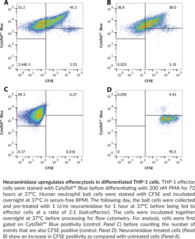
Efferocytosis is a specialized form of phagocytosis in which macrophages and other phagocytic cells clear dead and dying cells to promote homeostasis, embryonic development, regulation of the immune system and the resolution of inflammation.1 Efficient clearance of cells is essential for the removal of the nearly 1 million cells per second undergoing apoptosis in a human adult.2 Efferocytic removal of apoptotic cells before they become necrotic and release their contents can prevent an immune response to these non-pathogenic antigens.
Needed but not supplied: Please download the kit booklet to verify if UltraPure Water (Milli-Q or equivalent) or any other components are needed for this assay.
WARNING This product is not for human or veterinary use.
References & Product Citations
1. Modulation of marcrophage efferocytosis in inflammation. Front. Immunol. 2(57), 1-10 (2011).
2. Efferocytosis of pathogen-
High expression of Rex-
Palmitic acid alters enhancers/super-
Enhancement of anti-
Myoglobin-
Effect of passive administration of monoclonal antibodies recognizing simian immunodeficiency virus (SIV) V2 in CH59-
Myeloid cell hypoxia-
Lysophosphatidic acid via LPA-
Contact Info
Cayman Chemical1180 East Ellsworth RoadAnn Arbor, Michigan 48108 USAToll Free: (800) 364-9897(USA and Canada only)Fax: (734) 971-3640


