
News & Announcements
FAS Kits Advance Laboratory Detection of Synthetic Opioids and Emerging Drugs of Concern, Support Overdose Crisis Countermeasures
Article from 2024-05-14
Analytical laboratories are an essential ally in the response to the overdose crisis. By equipping analytical laboratories with reference standards that provide broad coverage of emerging drugs of abuse, including synthetic opioids and novel psychoactive substances (NPS), the Fentanyl Analog Screening (FAS) Kit, FAS Kit - Emergent Panels, and FAS Kit - Emergent Drug Panels support overdose crisis countermeasures.
The Overdose Crisis in the United States
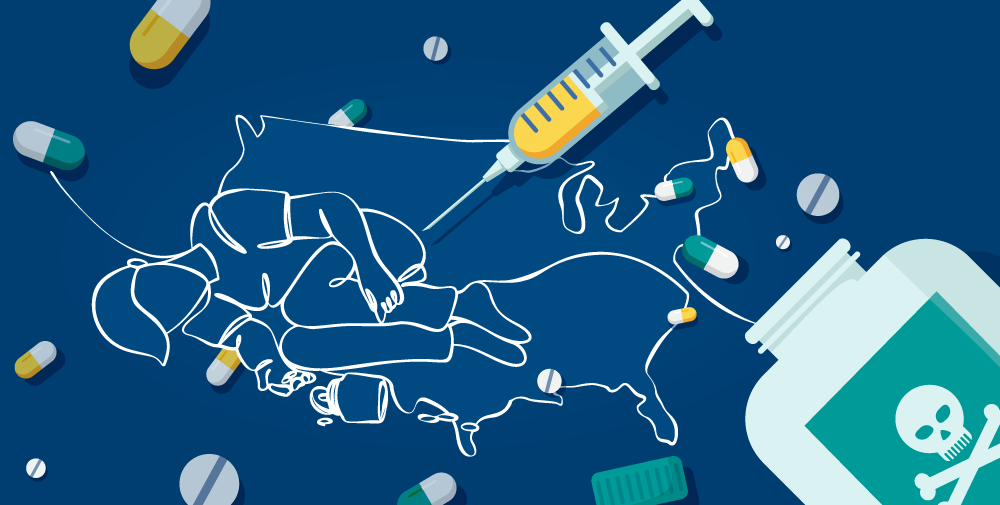
Deaths from drug overdoses have steadily risen in the United States.1 Synthetic opioids, especially fentanyl and fentanyl analogs, are responsible for most of these deaths. Coincident with the ongoing opioid crisis, there has recently been a marked increase in the emergence of NPS, representing significant challenges for clinicians, law enforcement, and public health authorities.
The Ongoing Opioid Epidemic
The opioid epidemic in the United States has been characterized by three waves, each involving a distinct class of opioid driving overdoses.2
- Wave 1: Prescription Opioids
- Wave 2: Heroin
- Wave 3: Synthetic Opioids, including fentanyl and fentanyl analogs
These waves reflect the constant evolution of the opioid epidemic in the United States. Recently, a shift towards polysubstance use has been observed, with cocaine and methamphetamine being increasingly detected as co-drugs in fentanyl-containing samples. Some experts have dubbed this latest trend as the "fourth wave" of the opioid epidemic. These drug combinations not only complicate treatment interventions but are associated with more overdoses.
The Emergence of NPS
In recent years, the rapid emergence of NPS has compounded the overdose crisis. NPS are designed to both mimic the effects of traditional drugs and evade drug enforcement and legal restrictions. NPS raise several concerns because of the relative ease and speed at which these analogs can be synthesized and introduced into the global drug market as well as their relatively unknown chemical nature and pharmacological activity.3
The NPS Discovery program at the Center for Forensic Science Research & Education (CFSRE) has monitored NPS in the United States since 2018.4 From 2018 to 2023, NPS Discovery has encountered 240 unique NPS in forensic samples, represented not only by opioids, stimulants, and cannabinoids but also benzodiazepines and hallucinogens.
Reproduced with permission from Krotulski, A.J., Papsun, D.M., Walton, S.E., et al. NPS Discovery: Year in Review 2023, Center for Forensic Science Research and Education, United States (2024). Available from: cfsre.org/nps-discovery/trend-reports.
Because of their ease of availability, low cost, and perception of being legal, NPS are popular choices among persons who use recreational drugs. However, the potency, metabolic, and toxicity profiles and associated risks are largely unknown.3
NPS Challenges for Analytical Laboratories
The overdose crisis is a complex issue involving the cooperative global efforts of healthcare providers, law enforcement, public health authorities, and community organizations. Analytical laboratories are an essential ally in the response to the overdose crisis and yet, NPS pose several challenges for laboratories tasked with the identification and detection of unknown substances in biological samples and seized samples.5 Complete coverage of these NPS requires current methodology and comprehensive reference libraries, straining agencies with already limited resources.6 Because of the rapid, transient, and constantly evolving introduction of NPS, these substances are often missing from reference libraries, resulting in incomplete substance profiling.5,6
FAS Kits Provide Access to Critically Needed Reference Standards
Access to reference standards is essential for the identification and detection of current and emerging drugs of concern in forensic, clinical, and toxicological casework. These standards enhance laboratory capabilities to identify unknown substances in various samples, aiding in determining their prevalence and potential effects on individuals, supporting prosecution of drug-related crimes and medicolegal matters, and monitoring regional drug supplies for use as an early overdose warning system.
The Centers for Disease Control and Prevention (CDC) developed Traceable Opioid Material® Kits (TOM Kits®) to support laboratory detection of current and emerging opioids as well as common co-drugs found in fentanyl-containing samples. The CDC has contracted Cayman, a global leader in NPS reference standard production, to manufacture and distribute the Fentanyl Analog Screening (FAS) Kit, FAS Kit - Emergent Panels V1-V4, and FAS Kit - Emergent Drug Panels to qualified labs authorized to handle controlled substances.
FAS Kit Overview
The FAS Kit, FAS Kit - Emergent Panels V1-V4, and FAS Kit - Emergent Drug Panels are a collection of reference standards for screening emerging drugs of concern. The original FAS Kit, launched in 2019, contained 120 fentanyl analog reference materials. Today, the FAS Kit collection has grown to provide coverage of 310 synthetic opioids and other emerging drugs of concern.
FAS Kits are available free-of-charge to qualified labs. |
FAS Kits support government, clinical, and academic research labs performing:
- Seized drug sample testing
- Toxicology testing and other biological sample analysis
- Analytical method development
- Environmental sample testing
- Drug pharmacology and pharmacokinetics research
- Public health surveillance and drug monitoring
The FAS Kit Collection At-A-Glance
| FAS Kit | FAS Kit - Emergent Panel V1 | FAS Kit - Emergent Panel V2 and 3 | FAS Kit - Emergent Panel V4 | Emergent Drug Panel | Emergent Drug Panel V1 | Emergent Drug Panel-Internal Standards | |
| Description | For screening synthetic opioid compounds | For screening emerging drugs of concern across multiple classes | Isotopically labelled compounds to use as internal standards in drug screening | ||||
| Coverage | Fentanyl analogs | Fentanyl analogs & other synthetic opioids | Synthetic opioids, stimulants, hallucinogens, benzodiazepines, & synthetic cannabinoids | Stimulants, hallucinogens, benzodiazepines, & synthetic cannabinoids | Synthetic opioids, stimulants, hallucinogens, benzodiazepines, & synthetic cannabinoids | ||
| No. of Compounds | 120 | 30 | 62 | 38 | 60 | 20 | 24 |
| Release Date | Jan 2019 | Jan 2019 | Feb 2020 | Feb 2021 | Apr 2023 | Apr 2024 | Apr 2024 |
FAS Kit & Emergent Panels (FAS V1-V4)
No longer available.
The FAS Kit and emergent Panels (FAS V1-V4) contain reference standards that enable labs to screen 250 synthetic opioid compounds, including:
|
Example Use Case – Analytical Method Development
Recently, Diekhans et al. developed an LC-MS/MS method for the comprehensive screening of synthetic opioids and xylazine in forensic toxicological casework with support from the FAS Kit and FAS Kit – Emergent Panels.7
Corresponding author, Luke N. Rodda, Ph.D., who serves as the Chief Forensic Toxicologist and Director of Forensic Laboratory Division at the San Francisco Office of the Chief Medical Examiner and Assistant Adjunct Professor of Laboratory Medicine at the University of California, San Francisco, commented, "with hundreds of novel synthetic opioids potentially available in communities, the FAS Kits have provided a unique opportunity for laboratories to develop screening methods for the most potent drug category we encounter in forensic toxicology casework."
He continued, "Our experience showed that after implementing a routine screening method for the sensitive detection of over 200 fentanyl analogs, we were immediately able to show the significant prevalence of fluorofentanyl in fatal overdoses – improving both the cause of death determination and information shared to policymakers for better public health interventions."
Download the compound list (PDF) to view the entire list of compounds covered in the FAS and FAS V1-V4 Kits. |
Emergent Drug Panel (EDP, EDP-V1) & Internal Standard (EDP-IS) Kits
Available to qualified labs in the US or a US Territory.
EDP and EDP-V1
The EDP and EDP-V1 expand coverage to co-drugs that may be found in fentanyl-containing samples. They are available to qualified labs in the US or its territories.
The EDP and EDP V1 provide coverage of 80 fentanyl co-drugs, including:
|
EDP-IS
The EDP-IS Kit contains isotopically labeled versions of select compounds included in the EDP and FAS Kits for use as internal standards in MS-based analyses.
The EDP-IS Kit includes isotopically labeled internal standards for the following compound classes:
|
Download the compound list (PDF) to view the entire list of compounds covered in the EDP, EDP-V1, and EDP-IS Kits. |
Eligibility Requirements
Labs that perform drug testing or analysis may apply for free FAS Kits if they meet the following requirements:
For US Applicants:
US applicants may apply for EDP, EDP-V1, and EDP-IS Kits
Requesting labs must be located in the US or a US Territory with a verifiable business address and hold a valid DEA controlled substance registration for Schedule I controlled substances.
Improve Your Lab's Drug Detection CapabilitiesApply Now for FAS Kits |
You May Also Be Interested In
 Comprehensive Analytical Standards Panels for the Detection of Drugs of Abuse |  NPS Snapshot: Nitazenes |
References
1. Mattson, C.L., Tanz, L.J., Quinn, K., et al. Trends and geographic patterns in drug and synthetic opioid overdose deaths — United States, 2013–2019. MMWR Morb. Mortal. Wkly. Rep. 70(6), 202–207 (2021).
2. Jones, C.M., Bekheet, F., Park, J.N., et al. The evolving overdose epidemic: Synthetic opioids and rising stimulant-related harms. Epidemiol. Rev. 42(1), 154–166 (2020).
3. Shafi, A., Berry, A.J., Sumnall, H., et al. New psychoactive substances: A review and updates. Ther. Adv. Psychopharmacol. 10, 2045125320967197 (2020).
4. Krotulski, A.J., Papsun, D.M., Walton, S.E., et al. NPS Discovery: Year in review 2023, Center for Forensic Science Research and Education, United States (2024). Available from: cfsre.org/nps-discovery/trend-reports.
5. Garneau, B., Desharnais, B., Laquerre, J. et al. A comprehensive analytical process, from NPS threat identification to systematic screening: Method validation and one-year prevalence study. Forensic Sci. Int. 318, 110595 (2021).
6. Wong, S.L., Ng, L.T., Tan, J. et al. Screening unknown novel psychoactive substances using GC–MS based machine learning. Forensic Chem. 34, 100499 (2023).
Diekhans, K., Yu, J., Farley, M., et al. Analysis of over 250 novel synthetic opioids and xylazine by LC–MS-MS in blood and urine. J. Anal. Toxicol. 48(3), 150-164 (2024).
Contact Info
Cayman Chemical1180 East Ellsworth RoadAnn Arbor, Michigan 48108 USAToll Free: (800) 364-9897(USA and Canada only)Fax: (734) 971-3640


