
News & Announcements
MDMA: From Rave Drug to Rave Reviews in Clinical Trials
Article from 2023-01-12
By Christine R. Barillas, Ph.D. - Technical Writer, Cayman Chemical
History
3,4-Methylenedioxymethylamphetamine (MDMA), also known as Ecstasy and Molly in the rave scene, is a psychoactive amphetamine categorized as an entactogen.1 In 1912, MDMA, then referred to as methylsafrylamin, was first synthesized by the Merck scientist Dr. Anton Köllisch as a precursor to 3-methylhydrastinine in an attempt to evade a Bayer patent for the synthetic route of the hemostatic agent hydrastinine.2 Merck resumed research of MDMA in the late 1920s because their procedural patent was expiring, but the research ended due to economic reasons. The psychotropic activity of MDMA in humans was not described in the scientific literature until decades later.3
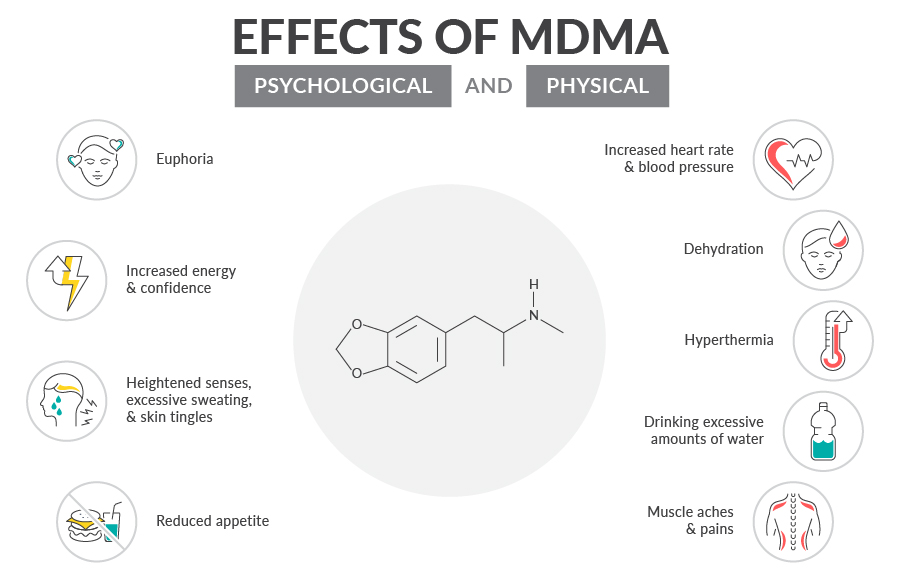
Figure 1. The diverse psychological and physiological effects of MDMA.
In 1978, Shulgin and Nichols, leading chemists in the psychedelics field, reported that, "Qualitatively, the drug appears to evoke an easily controlled altered state of consciousness with emotional and sensual overtones. It can be compared in its effects to marijuana, to psilocybin devoid of the hallucinatory component, or to low levels of 3,4-methylenedioxyamphetamine (MDA)."3 This report followed nearly a decade of recreational use of MDMA.4 During that time, the MDMA predecessor MDA was scheduled under the Controlled Substances Act in 1970, which prompted clandestine chemists to look for an alternative that would sidestep regulation (at least temporarily). While MDMA did not possess the hallucinogenic properties of MDA, it also lacked some of the negative effects associated with MDA use. The emotional effects of MDMA intrigued psychologists, who began to investigate its use in drug-assisted psychotherapy.5,6 Following a widespread increase in recreational use in the early 1980s, MDMA was listed as a United States (US) Drug Enforcement Administration (DEA) Schedule I substance in 1985.4
Despite its regulation as a scheduled drug, MDMA entered rave culture in the 1980s and continues to be intimately associated with it due to its entactogenic properties, among others (Figure 1).7,8 Raves enhance the euphoria and empathy elicited by the entactogen, a term derived from the Greek roots en and gen for within and generate, respectively, and the Latin root tactus meaning touch.9,1 David Nichols described this aspect of MDMA as "producing a touch within" and was recognized as a potential way to treat post-traumatic stress disorder (PTSD) as early as the late 1970s but was pursued in earnest starting in the early 2000s.
The first clinical trial for MDMA's use in drug-assisted psychotherapy was initiated in 2001 for the treatment of PTSD but was thwarted by in vivo preclinical data exposing the supposed neurotoxicity of MDMA in 2002; however, that paper was later retracted in 2003 as the study unknowingly used methamphetamine rather than MDMA.10 From 2004 to 2008, the first phase II clinical trial using MDMA for the treatment of PTSD was conducted and showed promising safety and efficacy data.11 In 2020, the US Food and Drug Administration (FDA) granted expanded access for drug-assisted psychotherapy with MDMA for patients who meet specific eligibility criteria.
Chemistry
Amphetamines such as MDMA are a type of stimulant, a class that also includes phenethylamines, benzofurans, tropanes, cathinones, arylcyclohexylamines, indanes, and piperazines. The core structure of the amphetamine class consists of phenylethylamine with a methyl substituent at the α-position, which introduces a chiral center (Figure 2, teal structure). The α-methyl group protects the molecules from degradation by monoamine oxidases, metabolic enzymes responsible for the degradation of phenylethylamine. MDA was the first amphetamine to show entactogenic activity in addition to the hallucinogenic activity seen with other atypical amphetamines such as the mescaline-inspired DOM (Figure 2).12,13 N-Methylation or α-ethylation of DOM attenuates or eliminates hallucinogenic activity, respectively, and the (R)-enantiomer is generally more active. An analogous, but distinct, case is true for MDA. The (R)-isomer of MDA is similar to LSD in that it has hallucinogenic activity, but the racemic mixture elicits, "an intensification of feelings, a facilitation of self-insight, and the creation of a state of mind that allows increased introspectiveness and insight," according to Shulgin, effects attributed to the (S)-isomer.14 MDMA is simply the N-methyl derivative of MDA, and, like N-methyl DOM, lacks hallucinogenic activity.12 However, the stereospecificity is flipped: it is (S)-(+)-MDMA that has higher activity. MBDB, which is the α-ethyl derivative of MDMA, possesses a similar activity profile (Figure 2). The opposite stereochemistry activity profile coupled with the retention of activity despite N-methylation sets MDMA apart from classical amphetamine-type stimulants. The various synthetic methods by which amphetamines, including MDMA, can be produced is well precedented in the scientific literature and enables the facile production of many isomers and analogs.15
Figure 2. Structure-activity relationships (SAR) of MDMA.
Pharmacology
The mechanism of action and psychological and physiological effects of MDMA are multi-faceted (Figure 1), but the entactogenic activity is, generally, thought to arise through modulation of the serotonergic system, which distinguishes it from classical stimulants that primarily increase the synaptic availability of norepinephrine (NE) and dopamine (DA).16 MDMA enters serotonergic neurons through the serotonin (5-HT) transporter (SERT) and inhibits vesicular monoamine transporter 2 (VMAT2), which normally sequesters 5-HT in intracellular vesicles, allowing 5-HT to accumulate in the cytosol (Figure 3). It simultaneously reverses the direction of SERT, which enables 5-HT release and prevents its reuptake, thus increasing 5-HT levels in the synaptic cleft (Figure 3). MDMA also inhibits DA and NE transporters (DAT and NET, respectively), leading to an extracellular increase in these neurotransmitters as well. The subjective entactogenic effects of MDMA are attenuated by the selective serotonin reuptake inhibitors (SSRIs) citalopram, paroxetine, and fluoxetine, as well as by the NET inhibitor reboxetine.
MDMA also acts as an agonist at several 5-HT receptor subtypes and various other receptors, including α1-, α2A-, and β-adrenergic receptors, dopamine D1 and D2 receptors, and histamine H1 receptors. The entactogenic effects can also be attenuated by the antipsychotic haloperidol, which acts at several of these receptors. The 5-HT2 receptor antagonist ketanserin does not decrease the euphoric effects but does decrease perceptual changes. Pindolol, a β1- and β2-adrenergic and 5-HT1A receptor antagonist, only decreases MDMA-induced confusion. Taken together, the mechanism of action of MDMA is complex and unique compared to classical stimulants such as amphetamine.
Figure 3. The mechanism of action of MDMA in a serotonergic neuron. Figure modified from Rupp, M. Psychedelic Drugs and the Serotonergic System. Sapiensoup, May 31, 2017. https://sapiensoup.com/serotonin (accessed 2022-10-25).
The acute physiological effects of MDMA are well described, including a sense of closeness with other people, pupil dilation, involuntary eye movement, jaw clenching, and teeth grinding, as well as effects associated with classical stimulants, such as insomnia.16,17 Importantly, MDMA also has cardiovascular effects, namely increased heart rate and blood pressure, and it induces hyperthermia, attributes that increase its danger in the rave scene where there is crowding and sustained physical activity.17,18,7
Metabolism
MDMA is metabolized via two pathways (Figure 4).19 In the major pathway, MDMA is dealkylated by the cytochrome P450 (CYP) isoform CYP2D6 to form 3,4-dihydroxymethamphetamine (3,4-DHMA), which can be glucuronidated or sulfated or undergo O-methylation by catechol-O-methyltransferase (COMT) to form 4-hydroxy-3-methoxymethamphetamine (HMMA), which also can be conjugated to glucuronide or sulfate. Alternatively, in the minor pathway, MDMA is N-demethylated by CYP3A4 to produce MDA, but this metabolite is not abundant and only represents ≤5% of total MDMA metabolites.20,21 MDA formed in this manner can also be dealkylated by CYP2D6 to form 3,4-dihydroxyamphetamine (DHA) and subsequently O-methylated to produce 4-hydroxy-3-methoxyamphetamine (HMA).18 Metabolites of MDMA have been found in urine, plasma, and saliva.19,22,21 Urinary metabolites are primarily sulfated or glucuronidated phase II metabolites, however, non-transformed MDMA and phase I metabolites have also been detected.22
Figure 4. MDMA metabolism. Figure modified from Br. J. Clin. Pharmacol. 49(2), 104-109 (2000).
Therapeutic Potential
Since the results of the first clinical trial were published in 2011, there has been a rapid expansion into examining the efficacy of MDMA as a potential therapeutic agent.11,23 The US FDA granted breakthrough therapy status to MDMA for the treatment of PTSD in 2017. This status recognized the therapeutic potential of MDMA and allowed its use in many clinical studies, which have seen encouraging results. In June 2021, a randomized, double-blind, placebo-controlled phase III study found MDMA-assisted psychotherapy to be safe and efficacious in the treatment of severe PTSD, significantly decreasing the overall severity, as well as reducing the functional impairment and depression symptoms in patients with severe PTSD.23 Clinicians hypothesize that MDMA allows patients to re-encounter their traumatic experiences without becoming emotionally overwhelmed. In the MDMA group of the 2021 study, 67% and 33% of patients achieved a loss of diagnosis and remission, respectively, compared with only 32% and 5% in the placebo group, respectively. Side effects in the MDMA group included increases in blood pressure, heart rate, and, infrequently, body temperature, which is not surprising given the therapeutic and recreational doses are in similar ranges. The main serious adverse events observed in the placebo group were suicide attempts and suicidal ideation that resulted in self-hospitalization, but these were absent in the MDMA group.
While these results are promising, trials comparing MDMA to established PTSD treatments are warranted.24 First-line treatment for PTSD includes psychotherapy and pharmacological interventions such as the SSRI antidepressants sertraline and paroxetine, therefore, a head-to-head comparison would be fundamental. Evaluation of other parameters, including quality of life and cost-effectiveness, and/or inclusion of long-term follow-up to determine lasting efficacy and safety will be important to include. In addition to PTSD, other areas of clinical interest for MDMA include eating disorders, anxiety associated with a life-threatening illness, social anxiety in adults with autism, and alcohol use disorder.
As with traditional therapeutics, having alternatives that bypass drug resistance or side effects are valuable for clinicians and patients. There are several entactogens that have similar in vitro pharmacology and subjective effects as MDMA with a similar safety profile (Table 1).16 These compounds comprise several chemical classes, including 1,3-benzodioxoles, cathinones, benzofurans, and aminoindanes. Many of the compounds have not been evaluated in a controlled clinical setting and the subjective effects are based on online reports from clandestine use where it is unknown what purity of the substances was used. Therefore, there is much research to be done before identifying an alternative to MDMA.
| 1,3-Benzodioxoles | Cathinones | Benzofurans | Aminoindanes | Other |
MDA |
Table 1. Alternative entactogens to MDMA with potential therapeutic applications. Adapted from J. Psychopharm.35(5), 512-536 (2021).
Available from Cayman
Cayman offers MDMA, its individual isomers and metabolites, and a large product line of amphetamines as individual compounds to aid in the research of these compounds for therapeutic use. Our Amphetamine Analytical Standards Panel comes preloaded with amphetamine derivatives, metabolites, and precursors in a convenient 96-well Matrix™ tube rack format for rapid screening or building in-house spectral libraries. Cayman also offers an Atypical Stimulants Analytical Standards Panel as a tool for screening or cataloging atypical stimulants, including arylcyclohexylamines, piperazines, aminoindanes, opioids, nootropics, and precursors in the synthesis of stimulants. To help accelerate your preclinical research, contact Cayman's Medicinal Chemistry & Structural Biology Services to contract our multidisciplinary team for their expertise in structure-based drug design, hit-to-lead optimization, and target validation. Cayman can also provide assistance to scientists in the identification of unknown compounds and provides other tools such as our Spectral Library, GC-MS Search Tool, and Identification & Naming Lab Guide Posters to help forensic chemists identify novel analogs.

Visit our Psychedelic Drug Discovery Resource Center to browse more psychedelic substances and access additional resources for psychedelic drug discovery research.
MDMA Parent Compounds and Metabolites
3,4-MDMA (hydrochloride)
(S)-(+)-3,4-MDMA (hydrochloride)
(R)-(−)-3,4-MDMA (hydrochloride)
3,4-MDMA-d3 (hydrochloride)
HMMA (hydrochloride)
4-hydroxy-3-Methoxyamphetamine (hydrochloride)
3',4'-Dihydroxyphenylacetone
3,4-Dihydroxyamphetamine (hydrochloride)
(±)-MDA (hydrochloride)
(±)-MDA-d3 (hydrochloride)
See all MDMA products
You May Also Be Interested In
 Stimulant Use and Abuse: Amphetamines |  Psychedelic Targets Research & Development |
 LSD and Its Structural Derivatives |  Rediscovering Psilocybin and Its Therapeutic Potential |
References
1. Nichols, D.E. Entactogens: How the name for a novel class of psychoactive agents originated. Front. Psychiatry 13, 863088 (2022).
2. Bernschneider-Reif, S., Oxler, F., and Freudenmann, R.W. The origin of MDMA ("ecstasy")--separating the facts from the myth. Pharmazie 61(11), 966-972 (2006).
3. Shulgin, A.T. and Nichols, D.E. Characterization of three new psychotomimetics. The Psychopharmacology of Hallucinogens. Stillman, R.C., Willette, R.E., editors, Pergamon Press (1978).
4. Passie, T. and Benzenhöfer, U. The history of MDMA as an underground drug in the United States, 1960-1979. J. Psychoactive Drugs 48(2), 67-75 (2016).
5. Greer, G. and Tolbert R. Subjective reports of the effects of MDMA in a clinical setting. J. Psychoactive Drugs 18(4), 319-327 (1986).
6. Wolfson, P.E. Meetings at the edge with Adam: A man for all seasons? J. Psychoactive Drugs 18(4), 329-333 (1986).
7. Weir, E. Raves: A review of the culture, the drugs and the prevention of harm. CMAJ 162(13), 1843-1848 (2000).
8. Palamar, J.J. and Keyes, K.M. Trends in drug use among electronic dance music party attendees in New York City, 2016-2019. Drug Alcohol Depend. 209, 107889 (2020).
9. Jenkins, P.N. Electronic dance music's love affair with ecstasy: A history. The Atlantic (2013).
10. Check, E. Psychedelic drugs: The ups and downs of ecstasy. Nature 429(6988), 126-128 (2004).
11. Mithoefer, M.C., Wagner, M.T., Mithoefer, A.T., et al. The safety and efficacy of ±3,4-methylenedioxymethamphetamine-assisted psychotherapy in subjects with chronic, treatment-resistant posttraumatic stress disorder: The first randomized controlled pilot study. J. Psychopharmacol. 25(4), 439-452 (2011).
12. Nichols, D.E. Differences between the mechanism of action of MDMA, MBDB, and the classic hallucinogens. Identifications of a new therapeutic class: Entactogens. J. Psychoactive Drugs 18(4), 305-313 (1986).
13. Standridge, R.T., Howell, H.G., Gylys, J.A., et al. Phenylalkylamines with potential psychotherapeutic utility. 1. 2-Amino-1-(2,5-dimethoxy-4-methylphenyl)butane. J. Med. Chem. 19(12), 1400-1404 (1976).
14. Shulgin, A.T. Psychotomimetic drugs: Structure-activity relationships. Stimulants. Iversen, L.L., editor, Plenum Press (1978).
15. Chambers, S.A., DeSousa, J.M., Huseman, E.D., et al. The DARK side of total synthesis: Strategies and tactics in psychoactive drug production. ACS Chem. Neurosci. 9(10), 2307-2330 (2018).
16. Oeri, H.E. Beyond ecstasy: Alternative entactogens to 3,4-methylenedioxymethamphetamine with potential applications in psychotherapy. J. Psychopharmcol. 35(5), 512-536 (2020).
17. Peroutka, S.J., Newman, H, and Harris, H. Subjective effects of 3,4-methylenedioxymethamphetamine in recreational users. Neuropsychopharmacology 1(4), 273-277 (1988).
18. Liechti, M.E. Effects of MDMA on body temperature in humans. Temperature (Austin) 1(3), 192-200 (2014).
19. de La Torre, R., Farré, M., Ortuño, J., et al. Non-linear pharmacokinetics of MDMA ('ecstasy') in humans. Br. J. Clin. Pharmacol. 49(2), 104-109 (2000).
20. Abraham, T.T., Barnes, A.J., Lowe, R.H., et al. Urinary MDMA, MDA, HMMA, and HMA excretion following controlled MDMA administration to humans. J. Anal. Toxicol. 33(8), 439-446 (2009).
21. Navarro, M., Pinchi, S., Farré, M., et al. Usefulness of saliva for measurement of 3,4-methylenedioxymethamphetamine and its metabolites: Correlation with plasma drug concentrations and effect of salivary pH. Clin. Chem. 47(10), 1788-1795 (2001).
22. Schwaninger, A.E., Meyer, M.R., Barnes, A.J., et al. Urinary excretion kinetics of 3,4-methylenedioxymethamphetamine (MDMA, Ecstasy) and its phase I and phase II metabolites in humans following controlled MDMA administration. Clin. Chem. 57(12), 1748-1756 (2011).
23. Mitchell, J.M., Bogenschutz, M., Lilienstein, A. et al. MDMA-assisted therapy for severe PTSD: A randomized, double-blind, placebo-controlled phase 3 study. Nat. Med. 27(6), 1025-1033 (2021).
24. Halvorsen, J.Ø., Naudet, F., Cristea, I.A. Challenges with benchmarking of MDMA-assisted psychotherapy. Nat. Med. 27(10), 1689-1690 (2021).
Contact Info
Cayman Chemical1180 East Ellsworth RoadAnn Arbor, Michigan 48108 USAToll Free: (800) 364-9897(USA and Canada only)Fax: (734) 971-3640


