
Features
- Measure glucose in plasma, serum, and urine
- Assay 40 samples in duplicate
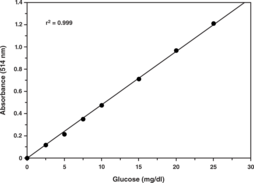
- Assay Range: 2.5-25 mg/dl
- Plate-based colorimetric measurement (500-520 nm)
Technical Support & Resources
Visit our FAQ
Contact Us
Toll Free Phone (USA and Canada Only): (888) 526-5351
Direct Phone: (734) 975-3888
Product Categories
Technical Information
Shipping & Storage Information
Recommended Products
Certificates of Analysis & Batch Specific Data
Provide batch numbers separated by commas to download or request available product inserts, QC sheets, certificates of analysis, data packs, and GC-MS data.

Explore Obesity & Metabolic Disease Resources
Discover high-quality research tools to investigate GLP-1 mechanisms and next-generation metabolic targets.
OBESITY RESEARCH SOLUTIONSProduct Description
Glucose, a monosaccharide (or simple sugar), is the most important carbohydrate in biology. Transported via the blood stream, it is the primary source of energy for the body’s cells. Glucose level is tightly regulated in the human body. Failure to maintain blood glucose in the normal range leads to conditions of persistently high (hyperglycemia) or low (hypoglycemia) blood sugar. Diabetes mellitus, characterized by persistent hyperglycemia, is the most prominent disease related to failure of blood sugar regulation. Cayman’s Glucose Colorimetric Assay Kit provides a simple, reproducible, and sensitive tool for assaying glucose in plasma, serum, and urine. The glucose assay uses the glucose oxidase-
Needed but not supplied: Please download the kit booklet to verify if UltraPure Water (Milli-Q or equivalent) or any other components are needed for this assay.
WARNING This product is not for human or veterinary use.
References & Product Citations
Glucose concentration affects fibrin clot structure and morphology as evidenced by fluorescence imaging and molecular simulations. Clincal and Applied Thrombosis/Hemostasis 24(9S), 104S-116S (2018).
MUC13 contributes to rewiring of glucose metabolism in pancreatic cancer. Oncogenesis 7:19, (2018).
Altered pancreatic islet morphology and function in SGLT1 knockout mice on a glucose-
Glucagon-
Protease-
A high-
Moderately low magnesium intake impairs growth of lean body mass in obese-
Western diet enhances benzo(a)pyrene-
Ruscogenin ameliorates experimental nonalcoholic steatohepatitis via suppressing lipogenesis and inflammatory pathway. Biomed. Res. Int. 652680 (2014).
Zerumbone, a natural cyclic sesquiterpene of Zingiber zerumbet Smith, attenuates nonalcoholic fatty liver disease in hamsters fed on high-
Contact Info
Cayman Chemical1180 East Ellsworth RoadAnn Arbor, Michigan 48108 USAToll Free: (800) 364-9897(USA and Canada only)Fax: (734) 971-3640


