
Technical Support & Resources
Information provided in the product description is from published literature. Due to the nature of scientific experimentation, your results (e.g., selectivity and effective concentrations) or specific application for this product may differ. If you have questions about how this product fits your application, please contact our technical support staff.
Visit our FAQ
Contact Us
Toll Free Phone (USA and Canada Only): (888) 526-5351
Direct Phone: (734) 975-3888
Technical Information
- NSC 53909
- NSC 618905
- Ponkanetin
- Tangeritin
Shipping & Storage Information
Recommended Products
Certificates of Analysis & Batch Specific Data
Provide batch numbers separated by commas to download or request available product inserts, QC sheets, certificates of analysis, data packs, and GC-MS data.

Visit Our Cancer Resource Center
Find Tools & Resources to Study the Hallmarks of Cancer
- Cancer cell signaling & regulation
- Cancer metabolism
- Tumor microenvironment
Product Description
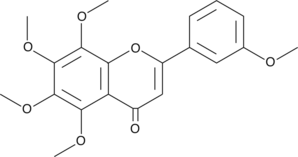
Tangeretin is a polymethoxylated flavone isolated from peels of citrus fruits. It inhibits signaling in cancer cells, reducing ERK phosphorylation and growth of estradiol-stimulated T47D breast cancer cells (IC50 ~ 3 μM)1 and blocking p38 MAPK, JNK, and Akt activation in interleukin-1β-stimulated human lung carcinoma A549 cells.2 Tangeretin activates the pregnane X receptor, inducing MDR1 expression in human colonic LS180 cancer cells at a concentration of 10 μM.3 It also inhibits growth of tumors and tumor implantation in lungs of mice inoculated with murine melanoma B16F10 cells.4 Tangeretin has been shown to protect against tunicamycin-induced cell death in isolated murine insulinoma MIN6 cells and in renal tubular epithelium in mice at a concentration of 10 μM.5 More recently, tangeretin has been found to significantly reduce serum total and LDL cholesterol and triacylglycerols in hypercholesteremic hamsters.6
WARNING This product is not for human or veterinary use.
References & Product Citations
1. Tangeretin inhibits extracellular-
2. Tangeretin suppresses IL-
3. Activation of pregnane X receptor and induction of MDR1 by dietary phytochemicals. J. Agric. Food Chem. 56(13), 5366-5373 (2008).
4. Treatment of metastatic melanoma B16F10 by the flavonoids tangeretin, rutin, and diosmin. J. Agric. Food Chem. 53(17), 6791-6797 (2005).
5. Methoxyflavones protect cells against endoplasmic reticulum stress and neurotoxin. Am. J. Physiol. Cell Physiol. 292(1), C353-C361 (2007).
6. Hypolipidemic effects and absorption of citrus polymethoxylated flavones in hamsters with diet-
Contact Info
Cayman Chemical1180 East Ellsworth RoadAnn Arbor, Michigan 48108 USAToll Free: (800) 364-9897(USA and Canada only)Fax: (734) 971-3640


