
Technical Support & Resources
Visit our FAQ
Contact Us
Toll Free Phone (USA and Canada Only): (888) 526-5351
Direct Phone: (734) 975-3888
Technical Information
- Cytosolic Epoxide Hydrolase (CEH)
- EPHX2
- Epoxide Hydrolase 2
- sEH
Shipping & Storage Information
Recommended Products
Certificates of Analysis & Batch Specific Data
Provide batch numbers separated by commas to download or request available product inserts, QC sheets, certificates of analysis, data packs, and GC-MS data.
Lipid Resource Center
Discover Products & Resources for Lipid Research
- High-purity lipid standards
- Lipid roles in biology
- Lipids in health & disease
- Lipids for pharmaceutical development
- Protocols, advice, & resources
Product Description
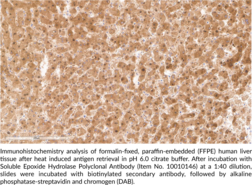
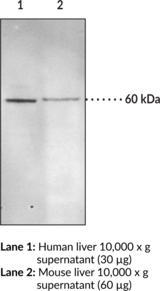
Soluble epoxide hydrolase (sEH) is a member of the α/β-hydrolase fold enzyme family that catalyzes the hydrolysis of bioactive fatty acid epoxides to inactive vicinal diols.1 It is a homodimer in which each subunit is composed of two domains, a C-terminal epoxide hydrolase domain and an N-terminal phosphatase domain.2,3 sEH is localized to the cytoplasm or to peroxisomes in a tissue-specific manner and is found in various tissues, including skin, lung, uterus, kidney, brain, and myocardium.4,5 sEH is also expressed in the vasculature and inhibition of sEH attenuates pathogenic vascular remodeling and hypertension via preservation of cardioprotective epoxyeicosatrienoic acids (EETs) in rat models of atherosclerosis and hypertension, respectively.6 Inhibition of sEH also has a protective role in various diseases, including inflammatory bowel disease, osteoarthritis, seizure, stroke, and Alzheimer’s disease, as well as in various chronic pain states.1,7 Cayman’s Soluble Epoxide Hydrolase Polyclonal Antibody can be used for Western blot. The antibody recognizes sEH at approximately 64 kDa from human, mouse, and rat samples.
WARNING This product is not for human or veterinary use.
References & Product Citations
1. Soluble epoxide hydrolase: Gene structure, expression and deletion. Gene 526(2), 61-74 (2013).
2. The N-
3. The soluble epoxide hydrolase as a pharmaceutical target for hypertension. J. Cardiovasc. Pharmacol. 50(3), 225-237 (2007).
4. Cell-
5. Soluble epoxide hydrolase and brain cholesterol metabolism. Front. Mol. Neurosci. 12, 325 (2020).
6. Soluble epoxide hydrolase inhibition modulates vascular remodeling. Am. J. Physiol. Heart Circ. Physiol. 298(3), H795-H806 (2009).
7. Soluble epoxide hydrolase as a therapeutic target for pain, inflammatory and neurodegenerative diseases. Pharmacol. Ther. 180, 62-76 (2017).
Contact Info
Cayman Chemical1180 East Ellsworth RoadAnn Arbor, Michigan 48108 USAToll Free: (800) 364-9897(USA and Canada only)Fax: (734) 971-3640


