
Technical Support & Resources
Information provided in the product description is from published literature. Due to the nature of scientific experimentation, your results (e.g., selectivity and effective concentrations) or specific application for this product may differ. If you have questions about how this product fits your application, please contact our technical support staff.
Visit our FAQ
Contact Us
Toll Free Phone (USA and Canada Only): (888) 526-5351
Direct Phone: (734) 975-3888

Technical Information
- BMY 27857
- d4T
- NSC 163661
Shipping & Storage Information
Recommended Products
Certificates of Analysis & Batch Specific Data
Provide batch numbers separated by commas to download or request available product inserts, QC sheets, certificates of analysis, data packs, and GC-MS data.
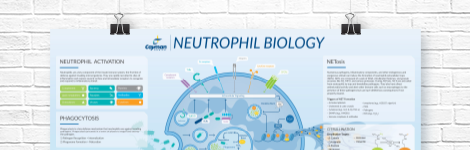
Neutrophil Biology Wall Poster
Explore how neutrophils shape the immune response in health and disease. This poster highlights neutrophil pathogen defense mechanisms, including phagocytosis, degranulation, and NETosis, as well as neutrophil roles in inflammation and NET-associated pathologies.
DOWNLOAD NOWProduct Description
Stavudine is an inhibitor of HIV reverse transcriptase and a derivative of the nucleoside thymidine (Item No. 20519).1 It inhibits HIV-1 replication in human peripheral blood mononuclear cells (PBMCs; EC50 = 8.8 nM). Stavudine reduces the synthesis of HIV-specific antigen in MT-4 cells when used at concentrations ranging from 0.1 to 10 µg/ml and reduces HIV-induced plaque formation in MT-4 cells at 0.05 µg/ml.2 It reduces plasma- and cell-associated viral load in macaques infected with a highly pathogenic isolate of HIV-2.3 Stavudine induces sustained hind paw mechanical allodynia in a rat model of antiretroviral toxic neuropathy (ATN) when administered at a dose of 75 mg/kg twice weekly for five consecutive doses for a cumulative dose of 375 mg/kg.4 Formulations containing stavudine, in combination with other antiretrovirals, have been used in the treatment of HIV-1 infection.
WARNING This product is not for human or veterinary use.
References & Product Citations
1. Potent and selective in vitro activity of 3'-
2. Inhibitory effect of 2',3'-
3. Early postinfection antiviral treatment reduces viral load and prevents CD4+ cell decline in HIV type 2-
4. Establishment and characterisation of a stavudine (d4T)-
Contact Info
Cayman Chemical1180 East Ellsworth RoadAnn Arbor, Michigan 48108 USAToll Free: (800) 364-9897(USA and Canada only)Fax: (734) 971-3640


