
Technical Support & Resources
Visit our FAQ
Contact Us
Toll Free Phone (USA and Canada Only): (888) 526-5351
Direct Phone: (734) 975-3888
Technical Information
- C3orf3
- Glycerol Uptake Transporter Homolog
- GUP1
- Hedgehog Acyltransferase-like Protein
- KIAA1173
- MBOAT3
- MSTP002
- OACT3
- Protein-Cysteine N-Palmitoyltransferase HHAT-like Protein
Shipping & Storage Information
Recommended Products

Certificates of Analysis & Batch Specific Data
Provide batch numbers separated by commas to download or request available product inserts, QC sheets, certificates of analysis, data packs, and GC-MS data.

Explore Obesity & Metabolic Disease Resources
Discover high-quality research tools to investigate GLP-1 mechanisms and next-generation metabolic targets.
OBESITY RESEARCH SOLUTIONSProduct Description
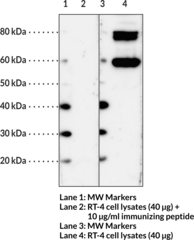
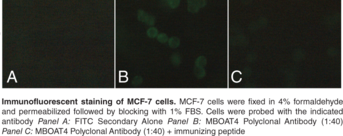
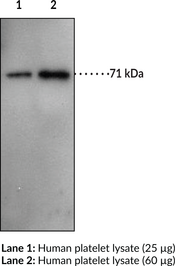
Hedgehog acyltransferase-like (HHATL) is the mammalian homolog of yeast Gup1 that is encoded by the HHATL gene in humans.1 HHATL is a membrane-bound O-acyltransferase (MBOAT) superfamily member and contains multiple transmembrane domains common to this family but lacks acyltransferase function due to a single amino acid substitution of histidine for leucine at position 447.1,2 It is localized to the endoplasmic reticulum (ER) and is expressed in the heart, skeletal muscle, and brain.1,3,4 HHATL colocalizes with sonic hedgehog (Shh) and is a negative regulator of Shh N-terminal palmitoylation, a post-translational modification that is critical for Shh signaling in neural development and embryogenesis.3 Hhatl-/- neonatal mice fail to develop proper suckling ability, leading to malnutrition and death by postnatal day 14.5 HHATL expression is decreased in six nasopharyngeal carcinoma cell lines, as well as in tissue isolated from patients with nasopharyngeal carcinoma or skin squamous cell carcinoma.6,7 Cayman's HHATL Polyclonal Antibody can be used for flow cytometry (FC), immunofluorescence (IF), and Western blot applications. The antibody recognizes HHATL at ~60 kDa from human samples.
WARNING This product is not for human or veterinary use.
References & Product Citations
1. Yeast Gup1(2) proteins are homologues of the hedgehog morphogens acyltransferases HHAT(L): Facts and implications. J. Dev. Biol. 4(4), 33 (2016).
2. Membrane-
3. Mammalian Gup1, a homolog of Saccharomyces cerevisiae glycerol uptake/transporter 1, acts as a negative regulator for N-
4. Subcellular localization and functional expression of the glycerol uptake protein 1 (GUP1) of Saccharomyces cerevisiae tagged with green fluorescent protein. Biochem. J. 390(Pt. 1), 145-155 (2005).
5. Mitsugumin 56 (hedgehog acyltransferase-
6. Detection of KIAA1173 gene expression in nasopharyngeal carcinoma tissues and cell lines on tissue microarray. Ai Zheng 24(11), 1322-1326 (2005).
7. Expression, clinical and pathological significance of KIAA1173 gene in skin squamous cell carcinoma. Zhonghua Yi Xue Za Zhi 90(18), 1243-1246 (2010).
Contact Info
Cayman Chemical1180 East Ellsworth RoadAnn Arbor, Michigan 48108 USAToll Free: (800) 364-9897(USA and Canada only)Fax: (734) 971-3640


