
Technical Support & Resources
Information provided in the product description is from published literature. Due to the nature of scientific experimentation, your results (e.g., selectivity and effective concentrations) or specific application for this product may differ. If you have questions about how this product fits your application, please contact our technical support staff.
Visit our FAQ
Contact Us
Toll Free Phone (USA and Canada Only): (888) 526-5351
Direct Phone: (734) 975-3888

Technical Information
- Ba 34276
Shipping & Storage Information
Recommended Products
Certificates of Analysis & Batch Specific Data
Provide batch numbers separated by commas to download or request available product inserts, QC sheets, certificates of analysis, data packs, and GC-MS data.
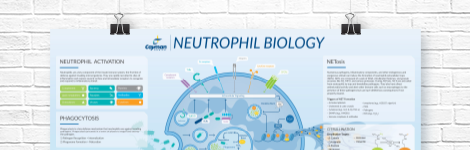
Neutrophil Biology Wall Poster
Explore how neutrophils shape the immune response in health and disease. This poster highlights neutrophil pathogen defense mechanisms, including phagocytosis, degranulation, and NETosis, as well as neutrophil roles in inflammation and NET-associated pathologies.
DOWNLOAD NOWProduct Description
Maprotiline is a tricyclic antidepressant.1,2 It binds to the norepinephrine transporter (NET; Kd = 11 nM) and is selective for NET over the serotonin (5-HT) and dopamine transporters (Kds = 5,800 and 1,000 nM, respectively).2 Maprotiline also binds to the 5-HT receptor subtype 5-HT2A (KI = 51 nM), as well as histamine H1, muscarinic acetylcholine, α1-adrenergic, and dopamine D2 receptors (Kds = 2, 570, 90, and 350 nM, respectively).3 In vivo, maprotiline inhibits norepinephrine reuptake in rat brain and peripheral tissues.4 It reduces isolation-induced aggressive behavior and inhibits electrical foot-shock stimulation-induced belligerence in mice when administered at doses ranging from 3 to 10 mg/kg. Maprotiline (20 µM) prevents acid sphingomyelinase activation and subsequent ceramide release induced by infection with replication-deficient vesicular stomatitis virus pseudoviral particles (pp-VSV) presenting the severe acute respiratory coronavirus 2 (SARS-CoV-2) spike protein in Vero cells, an effect that can be overcome with exogenous application of C16 ceramide (Item No. 10681).5 Formulations containing maprotiline have been used in the treatment of depression and anxiety. This product is also available as an analytical reference material (Item Nos. 32702 | 33077).
WARNING This product is not for human or veterinary use.
References & Product Citations
1. Review of the pharmacology of existing antidepressants. Br. J. Clin. Pharmacol. 4(Suppl 2), 57S-68S (1977).
2. Pharmacological profile of antidepressants and related compounds at human monoamine transporters. Eur. J. Pharmacol. 340(2-3), 249-258 (1997).
3. Antagonism by antidepressants of neurotransmitter receptors of normal human brain in vitro. J. Pharmacol. Exp. Ther. 230(1), 94-102 (1984).
4. Maprotiline: A review of its pharmacological properties and therapeutic efficacy in mental depressive states. Drugs 13(5), 321-352 (1977).
5. Pharmacological inhibition of acid sphingomyelinase prevents uptake of SARS-
Contact Info
Cayman Chemical1180 East Ellsworth RoadAnn Arbor, Michigan 48108 USAToll Free: (800) 364-9897(USA and Canada only)Fax: (734) 971-3640


