
Technical Support & Resources
Visit our FAQ
Contact Us
Toll Free Phone (USA and Canada Only): (888) 526-5351
Direct Phone: (734) 975-3888
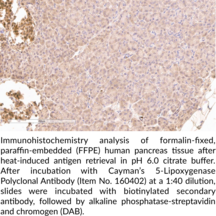
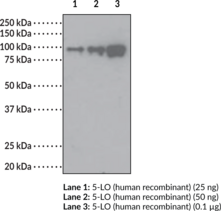
Technical Information
- ALOX5
- Arachidonate 5-Lipoxygenase
- 5-LO
- LOG5
- 5-LOX
Shipping & Storage Information
Recommended Products
Certificates of Analysis & Batch Specific Data
Provide batch numbers separated by commas to download or request available product inserts, QC sheets, certificates of analysis, data packs, and GC-MS data.
Lipid Resource Center
Discover Products & Resources for Lipid Research
- High-purity lipid standards
- Lipid roles in biology
- Lipids in health & disease
- Lipids for pharmaceutical development
- Protocols, advice, & resources
Product Description
5-Lipoxygenase (5-LO) is an enzyme encoded by ALOX5 in humans that is involved in leukotriene biosynthesis.1 It is comprised of an N-terminal regulatory domain and a C-terminal catalytic domain and is primarily expressed in leukocytes. Increases in intracellular calcium levels or cellular stress induce translocation of 5-LO from the cytosol or nucleoplasm, depending on the cell type and 5-LO phosphorylation status, to the nuclear envelope, where it interacts with 5-LO-activating protein (FLAP), which transfers arachidonic acid (Item Nos. 90010 | 90010.1 | 10006607) to 5-LO.1,2 5-LO catalyzes the conversion of arachidonic acid to 5(S)-HpETE (Item No. 44230) and then to leukotriene A4 (LTA4).3 Other substrates of 5-LO include 5,8,11,14,17-eicosapentaenoic acid, 5,8,11-eicosatrienoic acid, 5,8-eicosadienoic acid, 12-HpETE, and 15-HpETE. Alox5 knockout mice are protected against arthritis and pulmonary inflammation.2 Knockout of Alox5 also protects apolipoprotein E-deficient hyperlipidemic mice from high-fat diet-induced hepatic injury and inflammation.4 Levels of 5-LO are elevated in postmortem hippocampus and cortex of patients with Alzheimer's disease.5 Cayman's 5-Lipoxygenase Polyclonal Antibody can be used for Western blot and immunohistochemistry applications. The antibody recognizes 5-LO at 78 kDa from human and porcine samples.
WARNING This product is not for human or veterinary use.
References & Product Citations
1. 5-
2. The 5-
3. Arachidonate 5-
4. 5-
5. 5-
Loss of PPARcexpression in mammary secretory epithelial cellscreates a pro-
Determinants of sensitivity to DZNep induced apoptosis in multiple myeloma cells. PLoS One 6(6), e21583 (2011).
Mechanisms underlying increased reactivity of pulmonary arteries contralateral to a localized high-
Overexpression of 5-
The G2A receptor controls polarization of macrophage by determining their localization within the inflamed tissue. Front. Immunol. 9, 2261 (2018).
Contact Info
Cayman Chemical1180 East Ellsworth RoadAnn Arbor, Michigan 48108 USAToll Free: (800) 364-9897(USA and Canada only)Fax: (734) 971-3640


