
Features
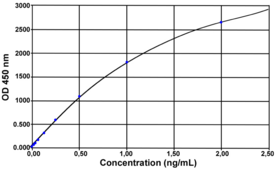
- Developed specifically for measuring TNF-α levels in porcine samples
- Measure TNF-α levels down to 0.02 ng/ml
Technical Support & Resources
Visit our FAQ
Contact Us
Toll Free Phone (USA and Canada Only): (888) 526-5351
Direct Phone: (734) 975-3888
Product Categories
Product Type
Application
Technical Information
- DIF
- Differentiation-inducing Factor
- TNFA
- TNFSF2
- Tumor Necrosis Factor-α EIA Kit
Shipping & Storage Information
Recommended Products
Certificates of Analysis & Batch Specific Data
Provide batch numbers separated by commas to download or request available product inserts, QC sheets, certificates of analysis, data packs, and GC-MS data.


Explore Obesity & Metabolic Disease Resources
Discover high-quality research tools to investigate GLP-1 mechanisms and next-generation metabolic targets.
OBESITY RESEARCH SOLUTIONSProduct Description
Known as cachectin, the TNF-α is a glycoprotein of 156 amino acids produced from a precursor processed by action of a metalloprotease. Isolated for the first time in 1975 by Carswell, it’s a cytokine of the innate immunity. Interleukin-1 or bacterial endotoxins stimulate the production of TNF-α by immune cells (activated macrophages, NK cells, and monocytes) and non-immune cells (keratinocytes, vascular smooth muscle cells, and granulosa lutein cells). The main function of the TNF-α is to act as an immunomodulator and as a mediator of inflammatory responses in the phenomena of host resistance to infection. It allows neutrophils and macrophages recruitment to infectious sites by stimulating the production of adhesion molecules and chemokines (chemotactic cytokines) by endothelial cells. TNF-α also acts on the hypothalamus to trigger the fever. Over-production of TNF-α has been implicated in a number of pathological conditions including cachexia, septic shock, and autoimmune disorders. [Bertin Catalog No. A05411]
WARNING This product is not for human or veterinary use.
Contact Info
Cayman Chemical1180 East Ellsworth RoadAnn Arbor, Michigan 48108 USAToll Free: (800) 364-9897(USA and Canada only)Fax: (734) 971-3640


