
Technical Support & Resources
Information provided in the product description is from published literature. Due to the nature of scientific experimentation, your results (e.g., selectivity and effective concentrations) or specific application for this product may differ. If you have questions about how this product fits your application, please contact our technical support staff.
Visit our FAQ
Contact Us
Toll Free Phone (USA and Canada Only): (888) 526-5351
Direct Phone: (734) 975-3888
Product Categories

Technical Information
- Lyso-Lecithins
Shipping & Storage Information
Recommended Products
Certificates of Analysis & Batch Specific Data
Provide batch numbers separated by commas to download or request available product inserts, QC sheets, certificates of analysis, data packs, and GC-MS data.
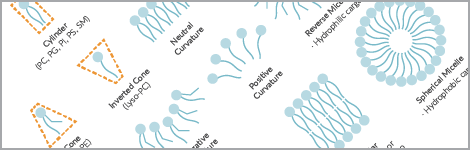
Learn More About Leveraging Helper Lipids to Achieve Versatile LNPs
READ THE ARTICLEProduct Description
Lysophosphatidylcholines are produced by hydrolysis of the fatty acid of phosphatidylcholine (PC; Item Nos. 24343 | 24370) at either the sn-1 or sn-2 position by phospholipase A2 (PLA2) or by lecithin-cholesterol acyltranferase (LCAT), which transfers the fatty acid to cholesterol.1 Lysophosphatidylcholine has effects on a variety of cell types, including smooth muscle cells, endothelial cells, T lymphocytes, monocytes, and macrophages among others. It is a major phospholipid component of oxidized low-density lipoprotein (ox-LDL), and it accumulates in animal models of atherosclerosis. Lysophosphatidylcholine also has pro-inflammatory properties through its activation and modulation of various signaling pathways, including the ERK pathway as well as through protein tyrosine kinase and G protein-coupled receptor (GPCR) signal transduction. It is released from apoptotic cells in vitro following caspase-3 activation of the calcium-independent PLA2 and acts as a chemoattractant for monocytes.2 Lysophosphatidylcholine (2 µl, 1%) injected into the caudal cerebellar peduncle of rats induces demyelination of axons in vivo, which are extensively remyelinated by oligodendrocytes six weeks following injection.3 This product contains lysophosphatidylcholine molecular species with primarily C16:0 fatty acyl chain lengths acylated to the sn-1 position. [Matreya, LLC. Catalog No. 1046]
WARNING This product is not for human or veterinary use.
References & Product Citations
1. Role of lysophosphatidylcholine (LPC) in atherosclerosis. Curr. Med. Chem. 14(30), 3209-3220 (2007).
2. Apoptotic cells induce migration of phagocytes via caspase-
3. Demyelination and remyelination of the caudal cerebellar peduncle of adult rats following stereotaxic injections of lysolecithin, ethidium bromide, and complement/anti-
Contact Info
Cayman Chemical1180 East Ellsworth RoadAnn Arbor, Michigan 48108 USAToll Free: (800) 364-9897(USA and Canada only)Fax: (734) 971-3640


