
News & Announcements
The Heads and Tails of Lipid-Based Drug Delivery
Article from 2022-01-25
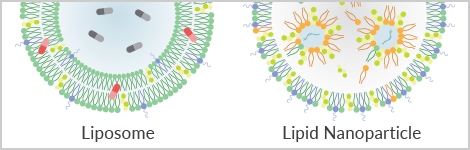
Lipid-based drug delivery (LBDD) systems, such as liposomes, lipid nanoparticles (LNPs), solid lipid nanoparticles (SLNs), and nanostructured lipid carriers (NLCs), are customizable platforms for the targeted delivery of pharmaceuticals and other therapeutic agents, for instance, vaccine components or oligonucleotides, to cells and tissues. LBDD overcomes obstacles associated with conventional therapeutic formulations by encapsulating bioactive molecules in a lipid vesicle, which increases their bioavailability, distribution, and plasma half-life, and decreases systemic toxicity induced by off-target activity. The versatility of LBDD formulations is achievable in part through the diversity of lipids available for these applications. By leveraging the biophysical properties of lipids, researchers can achieve an assortment of LBDD systems that encapsulate and deliver a wide variety of biomolecules (Figure 1).
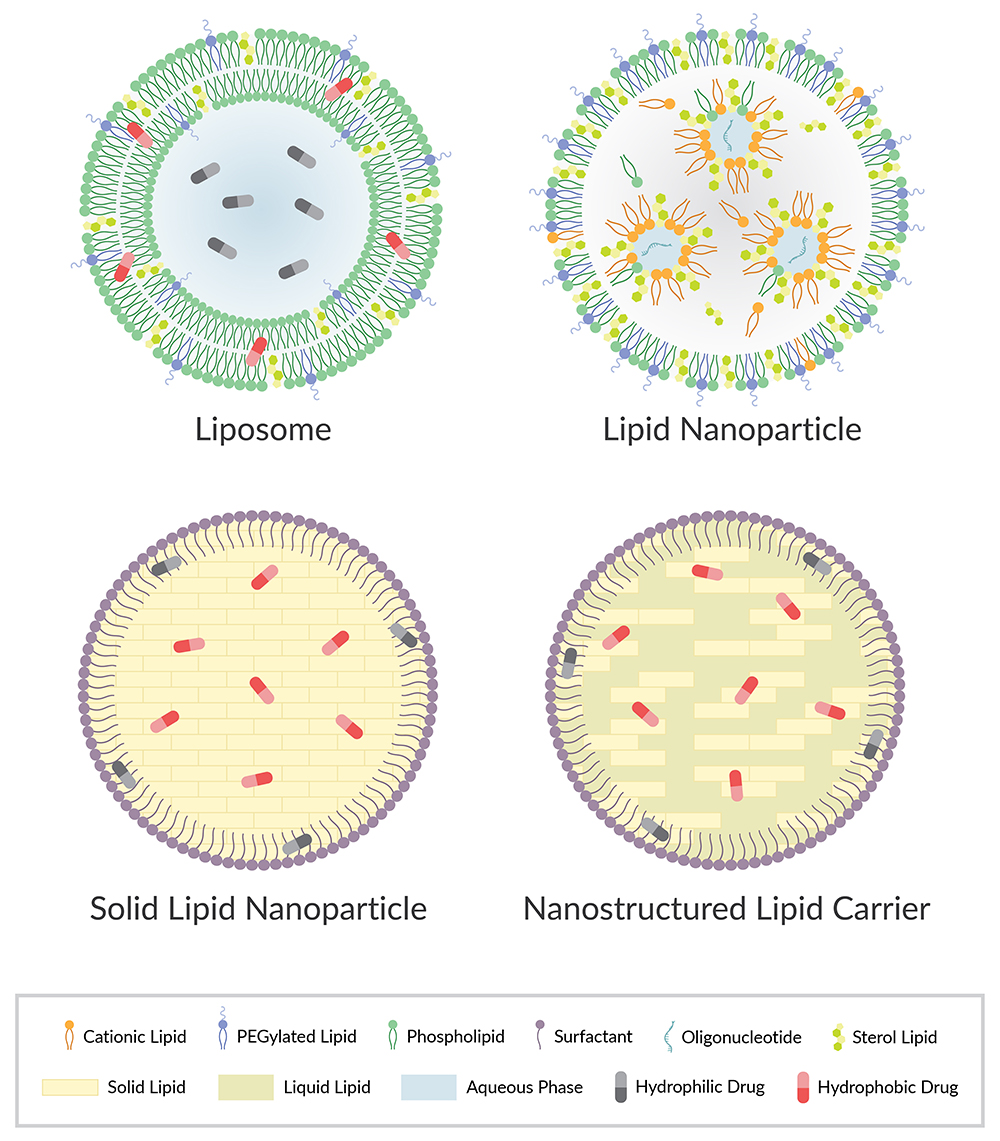
Figure 1. Examples of commonly used LBDD systems. A wide variety of LBDD systems can be formed by utilizing different lipids.
Structural Differences Between Phospholipids Used in LBDD Systems
LBDD systems are composed of mixtures of lipids, especially phospholipids (PLs), which contain a hydrophilic head group and a hydrophobic tail. PLs include glycerophospholipids (GPLs) and sphingomyelin (SM), which is also categorized as a sphingolipid (SL). GPLs contain a polar head group and two fatty acyl tails attached to a glycerol backbone. Differences in the polar head group give rise to various members, including phosphatidylcholine (PC), phosphatidylethanolamine (PE), phosphatidylglycerol (PG), phosphatidylinositol (PI), phosphatidylserine (PS), and phosphatidic acid (PA). SM is composed of a phosphocholine polar head group and a fatty acyl tail attached to a sphingosine backbone. The biophysical properties of these PLs are defined by variations in their polar head groups and fatty acyl tails, each possessing unique biophysical properties that can be leveraged in LBDD.
Biophysical Properties of PLs in LBDD Systems
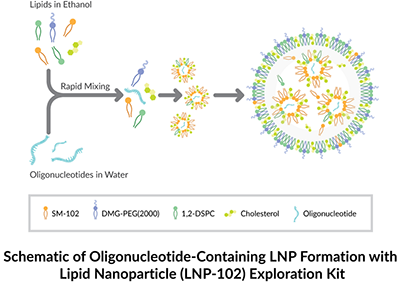
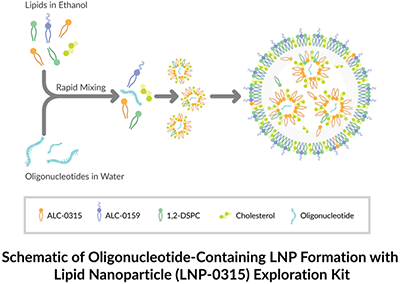
The structural and functional properties of an LBDD system depend on the physiochemical characteristics of its constituent lipids. PLs with various head group properties can be harnessed to mediate effective delivery of encapsulated cargo to cells. The hydrophilic head of PLs determines the surface charge of the particle, which can be neutral, negative, or positive (Figure 2).1 PC, PE, and SM are zwitterionic at pH 7 and have a neutral overall charge. Neutral PLs have an important role in membrane fusion of the LBDD particle, and they can also be used to distribute or modify its net surface charge. Anionic PLs, including PG, PI, PS, and PA, are typically used for the delivery of small molecules and are incorporated into neutral LBDD systems to prevent aggregation during storage. Synthetic cationic lipids have been widely used for the delivery of oligonucleotide cargoes, as their positively charged head group favors electrostatic interactions with both negatively charged oligonucleotides and cell membranes. These lipids, such as DOTAP and DOTMA, have a permanent positive charge at neutral pH and have been used to form lipoplexes for mRNA, siRNA, or pDNA transfection in vitro but are associated with cytotoxicity.2 Ionizable cationic lipids, such as SM-102 and ALC-0315, possess a transient positive charge that is acquired at low pH, which enables the effective encapsulation and delivery of anionic oligonucleotides without cytotoxicity. These lipids have been used to formulate LNPs in mRNA-based COVID-19 vaccines.3 Cayman now offers LNP Exploration Kits for the preparation of SM-102- or ALC-0315-containing LNPs for oligonucleotide delivery.
PEGylated lipids, such as ALC-0159 or DSPE-MPEG(2000), also have head groups that contribute functional properties to LBDD systems. PEGylation increases the circulation half-life of LBDD systems by imparting them with stealth properties.4 PEGylated lipids induce steric hindrance on the particle surface, reducing protein adsorption and preventing their recognition and uptake by the mononuclear phagocyte system (MPS), a major obstacle in the delivery of LBDD systems. In addition, some PEGylated lipids also contain terminal functional groups, such as amine or maleimide, which can be used to conjugate other molecules that improve cellular targeting and uptake.
The fatty acyl tails of PLs modulate membrane fluidity and permeability. PLs with short, unsaturated fatty acyl tails increase the fluidity of the membrane.5 Double bonds, especially cis-double bonds, form a 'kink' in the fatty acyl tail, increasing the volume that the lipid occupies and introducing lipid-packing defects, which increases the permeability of lipid membranes. To minimize this effect, cholesterol is frequently included in LBDD particles to fill packing defects and provide structural integrity.
Figure 2. The physical membrane properties of LBDD particles are dependent on membrane composition. The surface charge is influenced by the PL polar head group, and the fluidity of the membrane is altered by the saturation of the PL fatty acyl tails. Unsaturated PLs introduce packing defects in the lipid membrane, which increases its permeability.
Phase Assembly of PLs
The variation in LBDD systems arises from the amphiphilic nature of PLs and their propensity to self-assemble into various phases in aqueous solutions. Phase assemblies are dynamic and can be leveraged to control encapsulation, membrane fusion, and cargo release. The formation of lamellar or nonlamellar phase structures is influenced by PL geometry, which is altered by the degree of saturation of the fatty acyl tails.5,6 Fatty acyl tails with cis-double bonds occupy more space than fatty acyl tails that are saturated or contain trans-double bonds. PLs with similarly sized polar head groups and fatty acyl tails, such as PC, PG, PI, PS, and SM, have a cylindrical shape at neutral pH (Figure 3). These PLs tend to assemble into the lamellar phase, have neutral curvature, and are useful for the preparation of uni- or multi-lamellar liposomes. Nonlamellar phases, such as those formed by cone- or inverted cone-PLs, promote membrane fusion of the LBDD system with the target cell membrane.4,7 Cone-shaped PLs, such as PA and PE, have a small polar head group and bulky fatty acyl tails under physiological conditions and negative curvature. These lipids prefer to organize into inverted phases, such as reverse micelles, which can be used to encapsulate hydrophilic molecules, or the hexagonal HII phase, which has a highly ordered internal structure and can deliver large payloads.4-6,8 Lipids with a large polar head group and only one fatty acyl tail, such as lysophospholipids, have an inverted cone shape and form spherical micelles with positive curvature. Micelles can be used to encapsulate poorly soluble, hydrophobic molecules.4
Figure 3. Schematic representation of molecular shapes and phase assemblies of component PLs in LBDD particles. The molecular shape of a PL is determined by its geometry, which influences membrane curvature and phase assembly.
The phase transition of PLs can be leveraged to control cargo encapsulation and delivery. All PLs have a characteristic phase transition temperature (Tm), which is the temperature required to induce a change in the lipid physical state.6 The Tm of a PL is influenced by the length and saturation of its fatty acyl tails. Generally, lipids with shorter, unsaturated fatty acyl tails have lower Tms than lipids with longer, saturated fatty acyl tails. The fluidity of the lipid bilayer is increased at temperatures above the Tm, which promotes cargo encapsulation during preparation and release of the encapsulated cargo. Examples of LBDD systems that exemplify this property are SLNs and NLCs.9 Both SLNs and NLCs are composed of lipids, including glycerolipids, fatty acids, and sterol lipids, and are stabilized by emulsifiers or surfactants. However, SLNs are composed of solid lipids, whereas NLCs contain a mixture of solid and liquid lipids. SLNs and NLCs promote both cargo retention during storage and extended cargo release in vivo.
LBDD System Applications
LBDD systems are a promising approach to minimize the drawbacks of conventional therapeutic formulations. LNPs are currently in the headlines as a key component of mRNA-based COVID-19 vaccines, however, harnessing lipids for the delivery of encapsulated agents has been employed since the 1960s.4 To date, there are 29 LBDD formulations that have been approved for various uses, including in the treatment of cancer or fungal and viral diseases, or as analgesics or immunosuppressive agents. The most commonly used PLs in LBDD systems are PCs, PEs, PGs, and PSs, especially their saturated dimyristoyl (14:0/14:0), dipalmitoyl (16:0/16:0), distearoyl (18:0/18:0), and unsaturated dioleoyl (18:1/18:1) members. SM has also been used in clinically successful LBDD formulations as a component of Marqibo®, an FDA-approved form of vincristine, a chemotherapeutic agent, that is encapsulated in SM/cholesterol nanoliposomes.6
Besides careful selection of component lipids, LBDD systems can be endowed with additional functional properties to improve their efficacy. Targeted LBDD systems leverage receptor-ligand interactions to target specific cell populations. Ligands, such as small molecules, peptides, or antibodies, can decorate the surface of the lipid particle and bind to their cognizant receptor, which is expressed by the target cell population. In this manner, LBDD systems can be homed to specific cells. For example, liposomes modified with surface antibodies, termed immunoliposomes, against ganglioside M3 (GM3) have been used to target doxorubicin to GM3-expressing tumor cells.10
Available from Cayman
The formulation of a LBDD system requires a holistic approach that encompasses both the characteristics of the encapsulated cargo and its lipid constituents. The selection of quality lipids is critical for the success of your LBDD formulation. Cayman offers an expansive selection of high-purity lipids that can be used for the preparation of LBDD particles. You can also partner with our contract services team for custom synthesis of LNP lipid components.
Phospholipids
Natural PLs
Semi-Synthetic Phospholipids
1,2-Dimyristoyl-sn-glycero-3-PC (DMPC)
1,2-Dipalmitoyl-sn-glycero-3-PC (DPPC)
1,2-Distearoyl-sn-glycero-3-PC (DSPC)
1,2-Distearoyl-sn-glycero-3-PG (DSPG)
1,2-Dioleoyl-sn-glycero-3-PC (DOPC)
Cationic Lipids
1,2-Dioleoyl-3-trimethylammoniumpropane (chloride) (DOTAP)
N-[1-(2,3-Dioleyloxy)propyl]-N,N,N-trimethylammonium (DOTMA)
Ionizable Cationic Lipids
1,2-Dioleoyl-3-dimethylammonium-propane (DODAP)
PEGylated Lipids
REQUEST CUSTOM SYNTHESIS OF HIGH-PURITY LIPID COMPONENTS
Unsure where to start? Discover our Lipid Nanoparticle Exploration Kits designed for labs starting out with LNPs. Our Technical Support scientists are also here to help answer your research questions.
Lipid Nanoparticle Exploration KitsIntended to serve as a starting point for laboratories to explore the feasibility of using LNPs for their individual application without the need for specialized equipment.
|
You May Also Be Interested In
 | |
|
References
1. Beltrán‑Gracia, E., López‑Camacho, A., Higuera‑Ciapara, I., et al. Nanomedicine review: Clinical developments in liposomal applications. Cancer Nanotechnol. 10, 11 (2019).
2. Zhi, D., Bai, Y., Yang, J., et al. A review on cationic lipids with different linkers for gene delivery. Adv. Colloid Interface Sci. 253, 117-140 (2018).
3. Schoenmaker, L., Witzigmann, D., Kulkarni, J.A., et al. mRNA-lipid nanoparticle COVID-19 vaccines: Structure and stability. Int. J. Pharm. 601, 120586 (2021).
4. Tenchov, R., Bird, R., Curtze, A.E., et al. Lipid nanoparticles─from liposomes to mRNA vaccine delivery, a landscape of research diversity and advancement. ACS Nano 15, 16982-17015 (2021).
5. Holthuis, J.C.M. and Menon, A.K. Lipid landscapes and pipelines in membrane homeostasis. Nature 510(7503), 48-57 (2014).
6. Li, J., Wang, X., Zhang, T., et al. A review on phospholipids and their main applications in drug delivery systems. Asian J. Pharm. Sci. 10(2), 81-98 (2015).
7. Cullis, P.R. and Hope, M.J. Lipid nanoparticle systems for enabling gene therapies. Mol. Ther. 25(7), 1467-1475 (2017).
8. Xu, Z., Seddon, J.M., Beales, P.A., et al. Breaking isolation to form new networks: pH-Triggered changes in connectivity inside lipid nanoparticles. J. Am. Chem. Soc. 143(40), 16556-16565 (2021).
9. Duong, V.-A., Nguyen, T.-T.L., and Maeng, H.-J. Preparation of solid lipid nanoparticles and nanostructured lipid carriers for drug delivery and the effects of preparation parameters of solvent injection method. Molecules 25(20), (2020).
10. Nam, S.M., Kim, H.S., Ahn, W.S., et al. Sterically stabilized anti-G(M3), anti-Le(x) immunoliposomes: Targeting to B16BL6, HRT-18 cancer cells. Oncol. Res. 11(1), 9-16 (1999).
Contact Info
Cayman Chemical1180 East Ellsworth RoadAnn Arbor, Michigan 48108 USAToll Free: (800) 364-9897(USA and Canada only)Fax: (734) 971-3640


