
Technical Support & Resources
Information provided in the product description is from published literature. Due to the nature of scientific experimentation, your results (e.g., selectivity and effective concentrations) or specific application for this product may differ. If you have questions about how this product fits your application, please contact our technical support staff.
Visit our FAQ
Contact Us
Toll Free Phone (USA and Canada Only): (888) 526-5351
Direct Phone: (734) 975-3888
Product Categories
Lysophosphatidylinositol (porcine liver) (sodium salt)
Item No. 26016

Technical Information
Shipping & Storage Information
Recommended Products
Certificates of Analysis & Batch Specific Data
Provide batch numbers separated by commas to download or request available product inserts, QC sheets, certificates of analysis, data packs, and GC-MS data.
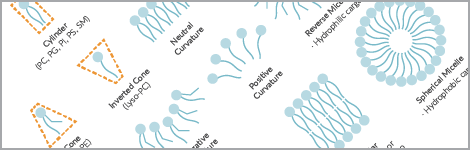
Learn More About Leveraging Helper Lipids to Achieve Versatile LNPs
READ THE ARTICLEProduct Description
Lysophosphatidylinositols (LPIs) are bioactive lysophospholipids formed via phospholipase A1 (PLA1) or PLA2 catabolism of phosphatidylinositol (Item No. 24523).1 They are produced in a variety of cells including human platelets, endothelial cells, and neutrophils and are found in the central and peripheral nervous system.2 LPIs containing stearic acid (Item No. 10011298) are the primary form found in rat brain followed by LPIs containing arachidonic acid (Item Nos. 90010 | 10006607), and both are agonists of the G protein-coupled receptor GPR55, with 2-arachidonoyl LPI having higher activity than 2-stearoyl LPI.1 LPIs also induce exocytotic release of insulin by pancreatic islet cells and intracellular calcium mobilization in a variety of cells, as well as increase ERK1/2, Akt, and p38 phosphorylation via GPR55 activation.3,2 LPIs accumulate in transformed cell lines due to increased PLA2 activity and blood levels are higher in patients with ovarian or peritoneal cancers compared with healthy controls.1,2 This product contains lysophosphatidylinositol molecular species with variable fatty acyl chain lengths at the sn-1 position and a hydroxy group in the sn-2 position.
WARNING This product is not for human or veterinary use.
References & Product Citations
1. The actions and metabolism of lysophosphatidylinositol, an endogenous agonist for GPR55. Prostaglandins Other Lipid Mediat. 107, 103-116 (2013).
2. Lysophosphatidylinositol signalling: New wine from an old bottle. Biochim. Biophys. Acta 1821(4), 694-705 (2012).
3. Lysophosphatidylinositol, but not lysophosphatidic acid, stimulates insulin release. A possible role for phospholipase A2 but not de novo synthesis of lysophospholipid in pancreatic islet function. Biochem. Biophys. Res. Commun. 138(2), 720-727 (1986).
Contact Info
Cayman Chemical1180 East Ellsworth RoadAnn Arbor, Michigan 48108 USAToll Free: (800) 364-9897(USA and Canada only)Fax: (734) 971-3640


