
Technical Support & Resources
Information provided in the product description is from published literature. Due to the nature of scientific experimentation, your results (e.g., selectivity and effective concentrations) or specific application for this product may differ. If you have questions about how this product fits your application, please contact our technical support staff.
Visit our FAQ
Contact Us
Toll Free Phone (USA and Canada Only): (888) 526-5351
Direct Phone: (734) 975-3888

Technical Information
Shipping & Storage Information
Recommended Products





Certificates of Analysis & Batch Specific Data
Provide batch numbers separated by commas to download or request available product inserts, QC sheets, certificates of analysis, data packs, and GC-MS data.
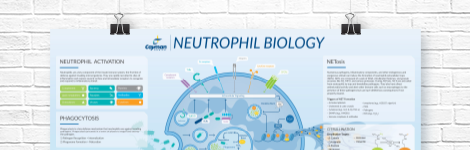
Neutrophil Biology Wall Poster
Explore how neutrophils shape the immune response in health and disease. This poster highlights neutrophil pathogen defense mechanisms, including phagocytosis, degranulation, and NETosis, as well as neutrophil roles in inflammation and NET-associated pathologies.
DOWNLOAD NOWProduct Description
TAK-779 is an antagonist of chemokine receptor 5 (CCR5), CCR2b, and CXC chemokine receptor 3 (CXCR3).1,2 It inhibits CCR5 and CXCR3 (IC50s = 236 and 369 nM, respectively, for mouse recombinant receptors expressed in 2B4 T cells) and CCR5 and CCR2b (IC50s = 1.4 and 27 nM, respectively, for human recombinant receptors expressed in CHO cells). TAK-779 inhibits the replication of clinical isolates of R5, but not X4, HIV-1 in human peripheral blood mononuclear cells (PBMCs; EC50s = 1.6-3.5 and >20,000 nM, respectively).1 TAK-779 (250 mg/animal per day) inhibits ovalbumin-induced increases in CCR5, CXCR3, IFN-γ, and TNF-α expression in mouse lung, as well as the number of total cells, lymphocytes, and eosinophils in bronchoalveolar lavage fluid (BALF), in a mouse model of asthma.3 It also increases intestinal allograft survival in a rat model of small intestine transplantation when administered at a dose of 10 mg/kg per day.4
WARNING This product is not for human or veterinary use.
References & Product Citations
1. A small-
2. The unique target specificity of a nonpeptide chemokine receptor antagonist: Selective blockade of two Th1 chemokine receptors CCR5 and CXCR3. J. Leukoc. Biol. 73(2), 273-280 (2003).
3. A small-
4. Effects of a calcineurin inhibitor, FK506, and a CCR5/CXCR3 antagonist, TAK-
Contact Info
Cayman Chemical1180 East Ellsworth RoadAnn Arbor, Michigan 48108 USAToll Free: (800) 364-9897(USA and Canada only)Fax: (734) 971-3640


