
Technical Support & Resources
Visit our FAQ
Contact Us
Toll Free Phone (USA and Canada Only): (888) 526-5351
Direct Phone: (734) 975-3888
Product Categories
Application
1-Palmitoyl-d3-2-hydroxy-sn-glycero-3-PC
Item No. 28229

Technical Information
- 1-Hexadecanoyl-sn-glycero-3-Phosphatidylcholine-d3
- 1-Hexadecanoyl-sn-glycero-3-Phosphocholine-d3
- LPC-d3
- 16:0/0:0(d3) Lyso-PC
- 1-Palmitoyl-sn-glycero-3-Phosphocholine-d3
- PC(16:0/0:0)-d3
- 16:0/0:0-PC-d3
Shipping & Storage Information
Recommended Products
Certificates of Analysis & Batch Specific Data
Provide batch numbers separated by commas to download or request available product inserts, QC sheets, certificates of analysis, data packs, and GC-MS data.
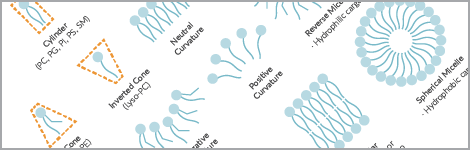
Learn More About Leveraging Helper Lipids to Achieve Versatile LNPs
READ THE ARTICLEProduct Description
1-Palmitoyl-d3-2-hydroxy-sn-glycero-3-PC is intended for use as an internal standard for the quantification of 1-palmitoyl-2-hydroxy-sn-glycero-3-PC (Item No. 10172) by GC- or LC-MS. 1-Palmitoyl-2-hydroxy-sn-glycero-3-PC is the ubiquitous lipid species generated following phospholipase A2 (PLA2) hydrolysis of phosphatidylcholine.1 It increases the production of reactive oxygen species (ROS) and decreases superoxide dismutase (SOD) and endothelial nitric oxide synthase (eNOS) protein levels and phosphorylation of ERK1/2 in human umbilical vein endothelial cells (HUVECs) when used at a concentration of 125 µM.2 1-Palmitoyl-2-hydroxy-sn-glycero-3-PC potentiates the secretion of IL-6, IL-1β, IL-12, and TNF-α in LPS-stimulated M1 macrophages, but has no effect on CD163, CD206, CD36, or IL-10 in LPS-stimulated M2 macrophages when used at concentrations of 0.3 and 1.0 µM.3 It increases TGF-β1 production and enhances Foxp3 protein levels in Treg cells in isolated human peripheral blood when used at a concentration of 10 µM.4 1-Palmitoyl-2-hydroxy-sn-glycero-3-PC enhances neutrophil function, bacterial clearance, and survival in mouse models of sepsis when administered at a dose of 10 mg/kg.5
WARNING This product is not for human or veterinary use.
References & Product Citations
1. Phospholipase A2 regulation of arachidonic acid mobilization. FEBS Lett. 531(1), 2-6 (2002).
2. Superoxide generated by lysophosphatidylcholine induces endothelial nitric oxide synthase downregulation in human endothelial cells. Cell Physiol. Biochem. 25(2-3), 233-240 (2010).
3. Lysophosphatidylcholine perpetuates macrophage polarization toward classically activated phenotype in inflammation. Cell. Immunol. 289(1-2), 185-190 (2014).
4. Lysophosphatidylcholine enhances the suppressive function of human naturally occurring regulatory T cells through TGF-
5. Therapeutic effects of lysophosphatidylcholine in experimental sepsis. Nat. Med. 10(2), 161-167 (2004).
Contact Info
Cayman Chemical1180 East Ellsworth RoadAnn Arbor, Michigan 48108 USAToll Free: (800) 364-9897(USA and Canada only)Fax: (734) 971-3640


