
Technical Support & Resources
Visit our FAQ
Contact Us
Toll Free Phone (USA and Canada Only): (888) 526-5351
Direct Phone: (734) 975-3888

Technical Information
Shipping & Storage Information
Recommended Products
Certificates of Analysis & Batch Specific Data
Provide batch numbers separated by commas to download or request available product inserts, QC sheets, certificates of analysis, data packs, and GC-MS data.
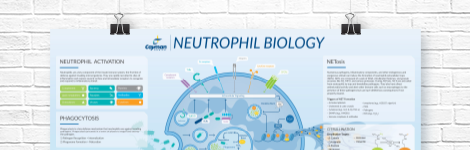
Neutrophil Biology Wall Poster
Explore how neutrophils shape the immune response in health and disease. This poster highlights neutrophil pathogen defense mechanisms, including phagocytosis, degranulation, and NETosis, as well as neutrophil roles in inflammation and NET-associated pathologies.
DOWNLOAD NOWProduct Description
Cloxacillin-13C4 is intended for use as an internal standard for the quantification of cloxacillin (Item No. 22249) by GC- or LC-MS. Cloxacillin is a β-lactam antibiotic and a derivative of oxacillin (Item No. 23954).1 It is active against clinical isolates of the Gram-positive bacteria S. aureus and S. epidermidis (MICs = 0.004-0.4 and 0.1-0.8 µg/ml, respectively) but not 34 Gram-negative bacteria (MICs = >128 µg/ml for all).1,2 Cloxacillin binds to S. aureus penicillin-binding protein 1 (PBP1), PBP2, PBP3, and PBP4 (IC50s = 0.04, 0.12, 0.21, and 2.5 µg/ml, respectively).3 It also binds to recombinant type Ib penicillinase, as well as P. vulgaris and C. freundii cephalosporinase (Kis = 15, 0.27, and 0.027 µM, respectively).4 Cloxacillin decreases the number of staphylococci in the mammary gland in a mouse model of acute, but not chronic, mastitis induced by Staphylococcus infection.5
WARNING This product is not for human or veterinary use.
References & Product Citations
1. Susceptibility of gram-
2. Susceptibility of Staphylococcus aureus and Staphylococcus epidermidis to 65 antibiotics. Antimicrob. Agents Chemother. 9(6), 962-969 (1976).
3. The possible physiological roles of penicillin-
4. Conversion of cloxacillin into a progressive inhibitor of beta-
5. Therapy of experimental staphylococcal mastitis in the mouse with cloxacillin and rifampicin, alone and in combination. Res. Vet. Sci. 31(3), 295-300 (1981).
Contact Info
Cayman Chemical1180 East Ellsworth RoadAnn Arbor, Michigan 48108 USAToll Free: (800) 364-9897(USA and Canada only)Fax: (734) 971-3640


