
Technical Support & Resources
Visit our FAQ
Contact Us
Toll Free Phone (USA and Canada Only): (888) 526-5351
Direct Phone: (734) 975-3888
Product Categories
Research Area
Application

Technical Information
Shipping & Storage Information
Recommended Products
Certificates of Analysis & Batch Specific Data
Provide batch numbers separated by commas to download or request available product inserts, QC sheets, certificates of analysis, data packs, and GC-MS data.
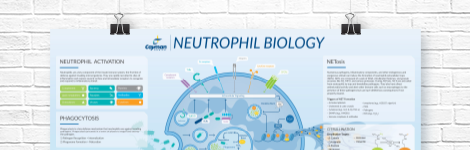
Neutrophil Biology Wall Poster
Explore how neutrophils shape the immune response in health and disease. This poster highlights neutrophil pathogen defense mechanisms, including phagocytosis, degranulation, and NETosis, as well as neutrophil roles in inflammation and NET-associated pathologies.
DOWNLOAD NOWProduct Description
Hesperetin-13C-d3 is intended for use as an internal standard for the quantification of hesperetin (Item No. 10006084) by GC- or LC-MS. Hesperetin is a flavonoid that has been found in citrus fruits and has diverse biological activities.1,2,3,4,5 It reduces ApoB protein levels, ACAT2 expression, and LDL degradation in HepG2 cells when used at a concentrations ranging from 10 to 200 µM.1 Hesperetin inhibits IgG-induced β-hexosaminidase release from RBL-2H3 cells (IC50 = 0.099 mg/ml).2 It inhibits LPS-induced nitric oxide (NO) production and reduces levels of inducible nitric oxide synthase (iNOS), IL-6, and IL-1β in BV-2 microglial cells.3 Hesperetin (5 mg/kg) inhibits passive cutaneous anaphylaxis in mice.2 It reduces body weight loss, colon shortening, and ulcer severity in a mouse model of TNBS-induced ulcerative colitis.4 Hesperetin reduces cortical and hippocampal neuronal apoptosis and increases time spent in the target quadrant in the Morris water maze in a mouse model of LPS-induced neuronal inflammation.5
WARNING This product is not for human or veterinary use.
References & Product Citations
1. Secretion of hepatocyte apoB is inhibited by the flavonoids, naringenin and hesperetin, via reduced activity and expression of ACAT2 and MTP. J. Lipid Res. 42(5), 725-734 (2001).
2. Antiallergic activity of hesperidin is activated by intestinal microflora. Pharmacology 71(4), 174-180 (2004).
3. Hesperetin inhibits neuroinflammation on microglia by suppressing inflammatory cytokines and MAPK pathways. Arch. Pharm. Res. 42(8), 695-703 (2019).
4. Flavonoids from Citrus aurantium ameliorate TNBS-
5. Hesperetin, a citrus flavonoid, attenuates LPS-
Contact Info
Cayman Chemical1180 East Ellsworth RoadAnn Arbor, Michigan 48108 USAToll Free: (800) 364-9897(USA and Canada only)Fax: (734) 971-3640


