
Technical Support & Resources
Visit our FAQ
Contact Us
Toll Free Phone (USA and Canada Only): (888) 526-5351
Direct Phone: (734) 975-3888
Product Categories

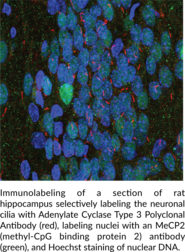
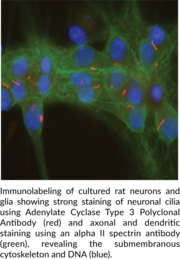
Technical Information
- ACIII
- Adenylyl Cyclase 3
- Adenylate Cyclase III
- Adenylyl Cyclase Type III
Shipping & Storage Information
Recommended Products
Certificates of Analysis & Batch Specific Data
Provide batch numbers separated by commas to download or request available product inserts, QC sheets, certificates of analysis, data packs, and GC-MS data.

Explore Obesity & Metabolic Disease Resources
Discover high-quality research tools to investigate GLP-1 mechanisms and next-generation metabolic targets.
OBESITY RESEARCH SOLUTIONSProduct Description
Adenylate cyclase type 3 (AC3) is a membrane-bound protein that catalyzes the formation of the second messenger cAMP from ATP (Item No. 14498) in response to G protein-coupled receptor (GPCR) signaling.1,2 It consists of 1,144 amino acids and is comprised of a cytoplasmic N-terminus followed by two repeating modules, each consisting of a transmembrane domain and a cytoplasmic domain, with the transmembrane domains composed of six membrane-spanning helices apiece.3,1 ADCY3, the gene encoding AC3, is expressed in a variety of tissues, with high levels in the placenta, testes, ovaries, and colon in humans.1,3 AC3 also localizes to primary cilia in the brain and has been used as a marker of primary cilia in mouse brain.4,5 Mutations in ADCY3 are associated with an increased risk of obesity and type 2 diabetes.2,3,4 Cayman's Adenylate Cyclase Type 3 Polyclonal Antibody can be used for immunocytochemistry (ICC), immunohistochemistry (IHC), and Western blot (WB) applications. The antibody recognizes AC3 at approximately 160 kDa from human, mouse, and rat samples.
WARNING This product is not for human or veterinary use.
References & Product Citations
1. Characterization of the human adenylyl cyclase gene family: cDNA, gene structure, and tissue distribution of the nine isoforms. J. Recept. Signal Transduct. Res. 22(1-4), 79-110 (2002).
2. Loss-
3. Loss-
4. ADCY3, neuronal primary cilia and obesity. Nat. Genet. 50(2), 166-167 (2018).
5. Type III adenylyl cyclase localizes to primary cilia throughout the adult mouse brain. J. Comp. Neurol. 505(25), 562-571 (2007).
Contact Info
Cayman Chemical1180 East Ellsworth RoadAnn Arbor, Michigan 48108 USAToll Free: (800) 364-9897(USA and Canada only)Fax: (734) 971-3640


