
Technical Support & Resources
Visit our FAQ
Contact Us
Toll Free Phone (USA and Canada Only): (888) 526-5351
Direct Phone: (734) 975-3888
Product Categories
Product Type
Application
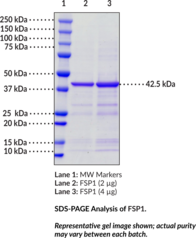
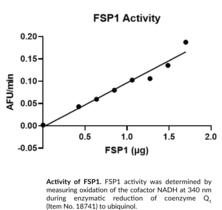
Technical Information
- AIFM2
- Apoptosis-inducing Factor Homologous Mitochondrion-associated Inducer of Death
- Apoptosis-inducing Factor Mitochondria-associated 2
- Ferroptosis Suppressor Protein 1
- p53-Responsive Gene 3 Protein
- PRG3
Shipping & Storage Information
Recommended Products
Certificates of Analysis & Batch Specific Data
Provide batch numbers separated by commas to download or request available product inserts, QC sheets, certificates of analysis, data packs, and GC-MS data.

Visit Our Cancer Resource Center
Find Tools & Resources to Study the Hallmarks of Cancer
- Cancer cell signaling & regulation
- Cancer metabolism
- Tumor microenvironment
Product Description
Ferroptosis suppressor protein 1 (FSP1), also known as apoptosis-inducing factor mitochondria-associated 2 (AIFM2), is a flavoprotein and NAD(P)H-dependent oxidoreductase that inhibits ferroptosis in a glutathione peroxidase 4- and glutathione-independent manner.1,2,3 It is encoded by AIFM2 in humans and is composed of a short N-terminal hydrophobic region followed by a flavin adenine dinucleotide-dependent oxidoreductase domain.2 FSP1 localizes to the plasma membrane in a myristoylation-dependent manner, where it reduces coenzyme Q10 (CoQ10; Item No. 11506) to CoQ10H2. Reduced CoQ10 functions as a radical-trapping antioxidant and inhibits lipid peroxidation. AIFM2 expression positively correlates with resistance to glutathione peroxidase 4 (GPX4) inhibitors, including (1S,3R)-RSL3 (Item No. 19288), ML-210 (Item No. 23282), and ML-162 (Item No. 20455) in cancer cell lines. Withdrawal of the ferroptosis inhibitor ferrostatin-1 (Item No. 17729) reduces tumor growth in an Fsp1/Gpx4 double knockout, but not a Gpx4 single knockout, H460 lung cancer mouse xenograft model, indicating that FSP1 confers resistance to ferroptotic cell death. Cayman's FSP1 (human, recombinant) protein can be used for enzyme assay applications.
WARNING This product is not for human or veterinary use.
References & Product Citations
1. FSP1 is a glutathione-
2. The CoQ oxidoreductase FSP1 acts parallel to GPX4 to inhibit ferroptosis. Nature 575(7784), 688-692 (2019).
3. The human apoptosis-
Contact Info
Cayman Chemical1180 East Ellsworth RoadAnn Arbor, Michigan 48108 USAToll Free: (800) 364-9897(USA and Canada only)Fax: (734) 971-3640


