
Technical Support & Resources
Visit our FAQ
Contact Us
Toll Free Phone (USA and Canada Only): (888) 526-5351
Direct Phone: (734) 975-3888
Product Categories
Product Type
Application
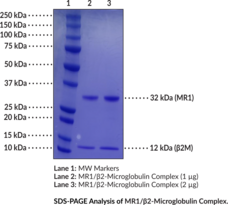
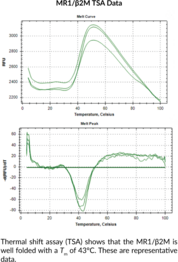
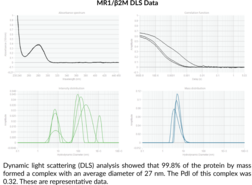
Technical Information
- Class I Histocompatibility Antigen-like Protein
- Major Histocompatibility Complex Class I-related Gene Protein
- MHC Class I-related Gene Protein
- β2-Microprotein
- β2M
Shipping & Storage Information
Recommended Products
Certificates of Analysis & Batch Specific Data
Provide batch numbers separated by commas to download or request available product inserts, QC sheets, certificates of analysis, data packs, and GC-MS data.

Visit Our Cancer Resource Center
Find Tools & Resources to Study the Hallmarks of Cancer
- Cancer cell signaling & regulation
- Cancer metabolism
- Tumor microenvironment
Product Description
MHC class I-related gene protein (MR1) is a non-polymorphic MHC class Ib antigen-presenting cell surface molecule that is required for T cell receptor-mediated activation of mucosal-associated invariant T (MAIT) cells.1,2 MR1 is composed of α1 and α2 domains, which form an antigen-binding pocket, and an α3 domain that interacts with β2-microglobulin, the light chain component of MHC class I molecules that facilitates complex transport to the cell surface and antigen presentation to cytotoxic T cells.2,3 Upon binding of a microbial antigen, MR1 undergoes a conformational change in the endoplasmic reticulum and translocates to the cell surface with β2-microglobulin where it induces MAIT cell activation via an interaction with the MAIT cell T cell receptor and activates various immunomodulatory effects, including cytokine release, initiation of adaptive immune responses, and promotion of tissue repair.4,5 The antigen-binding domain of MR1 binds to vitamin B metabolites, including metabolites of vitamin B2, also known as riboflavin, and vitamin B9 (folic acid; Item No. 20515).6 MHC class I-associated β2-microglobulin exhibits equilibrium exchange with circulating soluble β2-microglobulin and serum levels of β2-microglobulin are increased in patients with cancer, renal failure, systemic amyloidosis, or various autoimmune diseases, including multiple sclerosis.3,7,8,9
WARNING This product is not for human or veterinary use.
References & Product Citations
1. Expression and trafficking of MR1. Immunology 151(3), 270-279 (2017).
2. Structure and function of the non-
3. β2-
4. The intracellular pathway for the presentation of vitamin B-
5. Understanding and modulating the MR1 metabolite antigen presentation pathway. Mol. Immunol. 129, 121-126 (2021).
6. MR1 presents microbial vitamin B metabolites to MAIT cells. Nature 491(7426), 717-723 (2012).
7. Understanding the complex mechanisms of β2-
8. Systemic amyloidosis: Lessons from β2-
9. Beta-
Contact Info
Cayman Chemical1180 East Ellsworth RoadAnn Arbor, Michigan 48108 USAToll Free: (800) 364-9897(USA and Canada only)Fax: (734) 971-3640


