
Technical Support & Resources
Visit our FAQ
Contact Us
Toll Free Phone (USA and Canada Only): (888) 526-5351
Direct Phone: (734) 975-3888
Technical Information
- CED
- DPD1
- TGFB
Shipping & Storage Information
Recommended Products
Certificates of Analysis & Batch Specific Data
Provide batch numbers separated by commas to download or request available product inserts, QC sheets, certificates of analysis, data packs, and GC-MS data.

Explore Obesity & Metabolic Disease Resources
Discover high-quality research tools to investigate GLP-1 mechanisms and next-generation metabolic targets.
OBESITY RESEARCH SOLUTIONSProduct Description
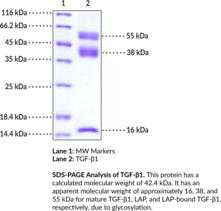
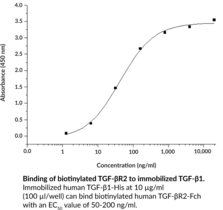
Transforming growth factor β1 (TGF-β1) is a multifunctional cytokine and member of the TGF-β superfamily.1,2 It is an extracellular dimeric protein that is produced by multiple cell types, including macrophages, platelets, neutrophils, regulatory T cells, and renal tubular cells, and is the most abundantly expressed isoform of TGF-β. TGF-β1 is expressed as a proprotein that is cleaved in the Golgi to form a latency-associated peptide (LAP) and mature TGF-β1.2 LAP and TGF-β1 remain non-covalently bound until mature TGF-β1 is released from latency by various proteins, including matrix metalloproteinases and plasmin, to regulate immune function, epithelial-mesenchymal transition, and cell proliferation. Severe acute respiratory syndrome coronavirus (SARS-CoV) papain-like protease induces TGF-β1-dependent type I collagen production, a marker of pulmonary fibrosis, in A549 cells and mouse lung.3 Expression of constitutively active TGF-β1 induces Alzheimer’s disease-like cerebrovascular stiffness and vascular hypertrophy in mice.4 Serum and urine levels of TGF-β1 are increased in patients with type 2 diabetes.5 Cayman's TGF-β1 (human, recombinant) protein can be used for ELISA, Western blot, and cell-based assay applications. The LAP-bound form of this protein consists of 370 amino acids and has a calculated molecular weight of 42.4 kDa. By SDS-PAGE, under reducing conditions, the apparent moleular mass of the protein is 16, 38, and 55 kDa for mature TGF-β1, LAP, and LAP-bound TGF-β1, respectively, due to glycosylation.
WARNING This product is not for human or veterinary use.
References & Product Citations
1. TGF-
2. TGF-
3. SARS coronavirus papain-
4. TGF-
5. Changes of transforming growth factor beta 1 in patients with type 2 diabetes and diabetic nephropathy: A PRISMA-
Contact Info
Cayman Chemical1180 East Ellsworth RoadAnn Arbor, Michigan 48108 USAToll Free: (800) 364-9897(USA and Canada only)Fax: (734) 971-3640


