
Technical Support & Resources
Visit our FAQ
Contact Us
Toll Free Phone (USA and Canada Only): (888) 526-5351
Direct Phone: (734) 975-3888
Product Categories
Product Type
Application
Technical Information
- CD357
- GITR-D
- Glucocorticoid-induced TNFR-related Protein
- TNF Receptor Superfamily Member 18
- TNFRS18
- Tumor Necrosis Factor Receptor Superfamily Member 18
Shipping & Storage Information
Recommended Products
Certificates of Analysis & Batch Specific Data
Provide batch numbers separated by commas to download or request available product inserts, QC sheets, certificates of analysis, data packs, and GC-MS data.

Visit Our Cancer Resource Center
Find Tools & Resources to Study the Hallmarks of Cancer
- Cancer cell signaling & regulation
- Cancer metabolism
- Tumor microenvironment
Product Description
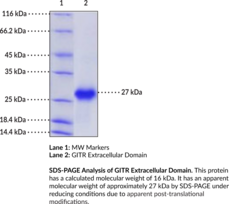
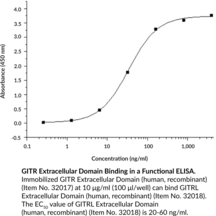
Glucocorticoid-induced TNFR-related protein (GITR), also known as TNF receptor superfamily member 18 (TNFRS18), is a type I transmembrane glycoprotein and member of the tumor necrosis factor receptor superfamily with roles in acquired and innate immunity.1 It is composed of an extracellular domain that contains a ligand binding site, a transmembrane domain, and a cytoplasmic domain that facilitates the induction of NF-κB signaling.1,2 GITR is primarily expressed in immature and mature T cells and natural killer (NK) cells but is also expressed at low levels in mast cells, eosinophils, B cells, macrophages, as well as non-lymphoid tissues, osteoclast precursor cells, keratinocytes, and retinal epithelial cells. Upon binding of its ligand GITRL (Item No. 32018), GITR binds various TNF receptor-associated factors (TRAFs) and induces signaling in a cell type-specific manner.3 GITR protein levels are increased in macrophages and dendritic cells in a mouse model of T. gondii infection, and administration of an agonistic anti-GITR antibody increases pro-inflammatory cytokine production in peritoneal fluid and reduces chronic phase parasite burden in the same model.4 Protein levels of GITR are also increased on CD4+CD25+, CD4+CD25high, and CD4+CD25+CD127low/- regulatory T cells isolated from patients with systemic lupus erythematosus (SLE) compared with healthy controls.5 Intratumor, but not peripheral, administration of an agonistic anti-GITR antibody increases overall survival in a GL261 murine glioma model.6 Cayman's GITR Extracellular Domain (human, recombinant) protein can be used for ELISA. This protein consists of 147 amino acids, has a calculated molecular weight of 16 kDa, and a predicted N-terminus of Gln26 after signal peptide cleavage. By SDS-PAGE, under reducing conditions, the molecular mass of the protein is approximately 27 kDa due to apparent post-translational modifications.
WARNING This product is not for human or veterinary use.
References & Product Citations
1. GITR: A modulator of immune response and inflammation. Therapeutic Targets of the TNF Superfamily 647, 156-173 (2009).
2. GITR-
3. Cell-
4. GITR activation positively regulates immune responses against Toxoplasma gondii. PLoS One 11(3), e0152622 (2016).
5. Aberrant GITR expression on different T cell subsets and the regulation by glucocorticoid in systemic lupus erythematosus. Int. J. Rheum. Dis. 19(2), 199-204 (2016).
6. Anti-
Contact Info
Cayman Chemical1180 East Ellsworth RoadAnn Arbor, Michigan 48108 USAToll Free: (800) 364-9897(USA and Canada only)Fax: (734) 971-3640


