
Technical Support & Resources
Visit our FAQ
Contact Us
Toll Free Phone (USA and Canada Only): (888) 526-5351
Direct Phone: (734) 975-3888

Technical Information
- PKBαE17K
- PKBβE17K
Shipping & Storage Information
Recommended Products
Certificates of Analysis & Batch Specific Data
Provide batch numbers separated by commas to download or request available product inserts, QC sheets, certificates of analysis, data packs, and GC-MS data.

Explore Obesity & Metabolic Disease Resources
Discover high-quality research tools to investigate GLP-1 mechanisms and next-generation metabolic targets.
OBESITY RESEARCH SOLUTIONSProduct Description
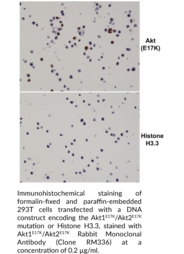
Akt1 and Akt2, also known as protein kinase Bα (PKBα) and PKBβ, respectively, are serine/threonine kinase belonging to the AGC kinase family and two of three Akt isoforms in mammals.1,2 Akt kinases function downstream of activated tyrosine kinases and PI3K to regulate a variety of cellular processes, including cell size, growth, proliferation, and survival, as well as genome stability, glucose metabolism, and neovascularization.2 They are comprised of an N-terminal pleckstrin homology (PH) domain, which binds to phosphatidylinositol-(3,4,5)-triphosphate (PIP3) and phosphatidylinositol-(3,4)-diphosphate (PIP2), a kinase domain, and a C-terminal regulatory hydrophobic motif. Akt1 and Akt2 are ubiquitously expressed and are the primary isoforms in endothelial cells and insulin-responsive tissues, respectively.3 Akt1E17K is an activating mutation that has been found in tumor tissue isolated from patients with breast, colorectal, or ovarian cancer.4 Akt2E17K mutations have been found in patients with hypoglycemia.5 Cayman's Akt1E17K/Akt2E17K Rabbit Monoclonal Antibody (Clone RM336) can be used for ELISA, immunohistochemistry (IHC), and Western blot (WB) applications.
WARNING This product is not for human or veterinary use.
References & Product Citations
1. Physiological roles of PKB/Akt isoforms in development and disease. Biochem. Soc. Trans. 35(Pt 2), 231-235 (2007).
2. Activation of AKT kinases in cancer: Implications for therapeutic targeting. Adv. Cancer Res. 94, 29-86 (2005).
3. AKT/PKB signaling: Navigating downstream. Cell 129(7), 1261-1274 (2007).
4. A transforming mutation in the pleckstrin homology domain of AKT1 in cancer. Nature 448(7152), 439-444 (2007).
5. An activating mutation of AKT2 and human hypoglycemia. Science 334(6055), 474 (2011).
Contact Info
Cayman Chemical1180 East Ellsworth RoadAnn Arbor, Michigan 48108 USAToll Free: (800) 364-9897(USA and Canada only)Fax: (734) 971-3640


