
Technical Support & Resources
Visit our FAQ
Contact Us
Toll Free Phone (USA and Canada Only): (888) 526-5351
Direct Phone: (734) 975-3888

Technical Information
- Mammalian Target of Rapamycin
- Mechanistic Target of Rapamycin Kinase
- RAFT1
- RAPT1
Shipping & Storage Information
Recommended Products
Certificates of Analysis & Batch Specific Data
Provide batch numbers separated by commas to download or request available product inserts, QC sheets, certificates of analysis, data packs, and GC-MS data.

Explore Obesity & Metabolic Disease Resources
Discover high-quality research tools to investigate GLP-1 mechanisms and next-generation metabolic targets.
OBESITY RESEARCH SOLUTIONSProduct Description
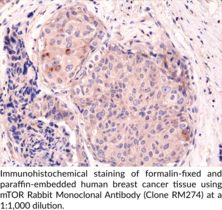
Mammalian target of rapamycin (mTOR) is a serine/threonine kinase and member of the PI3K-related kinase family with roles in the regulation of cell growth and metabolism.1,2 It is comprised of N-terminal tandemly repeated HEAT motifs that facilitate protein-protein interactions, a FRAP, ATM, and TRRAP (FAT) domain, an FKBP12-rapamycin binding (FRB) domain, a catalytic kinase domain, an autoinhibitory/repressor domain, and a FAT carboxy-terminal (FATC) domain that is essential to kinase activity.2 mTOR is ubiquitously expressed in the cytosol and is the catalytic subunit of mTOR complex 1 (mTORC1) and mTORC2, which have roles in aging, autophagy, stem cell and immune function, cellular senescence, and macromolecule biogenesis, and cell survival, cytoskeletal organization, and metabolism, respectively.2,3 It is a component of the PI3K/AKT/mTOR signaling pathway that acts as a junction point both upstream and downstream of AKT.4 Dysregulation of the mTOR signaling pathway is associated with various pathologies, including cancer, rheumatoid arthritis, epilepsy, neurodegenerative diseases, and diabetes.4,5,2 Cayman’s mTOR Rabbit Monoclonal Antibody (Clone RM274) can be used for immunohistochemistry (IHC) and Western blot (WB) applications.
WARNING This product is not for human or veterinary use.
References & Product Citations
1. mTOR as regulator of lifespan, aging, and cellular senescence: A mini-
2. mTOR signaling in protein translation regulation: Implications in cancer genesis and therapeutic interventions. Mol. Biol. Int. 686984 (2014).
3. mTOR pathway: A current, up-
4. mTOR signaling at a glance. J. Cell Sci. 122(pt 20), 3589-3594 (2009).
5. A critical review of mTOR inhibitors and epilepsy: From basic science to clinical trials. Expert Rev. Neurother. 13(6), 657-669 (2013).
Contact Info
Cayman Chemical1180 East Ellsworth RoadAnn Arbor, Michigan 48108 USAToll Free: (800) 364-9897(USA and Canada only)Fax: (734) 971-3640


