
Technical Support & Resources
Visit our FAQ
Contact Us
Toll Free Phone (USA and Canada Only): (888) 526-5351
Direct Phone: (734) 975-3888
Product Categories

Technical Information
- Cluster of Differentiation 19
Shipping & Storage Information
Recommended Products
Certificates of Analysis & Batch Specific Data
Provide batch numbers separated by commas to download or request available product inserts, QC sheets, certificates of analysis, data packs, and GC-MS data.
Kinase Resource Center
Discover Products & Resources for Kinase Research
- Kinase inhibitors, screening libraries, assay kits, & more
- Tools to study kinase signaling pathways:
- Growth factor signaling
- PI3K/Akt/mTOR
- MAPKs (ERK, p38, & JNK)
- JAK/STAT signaling
- Articles, resources, & advice
Product Description
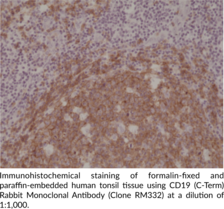
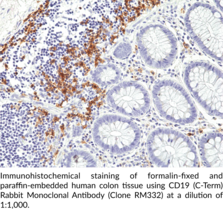
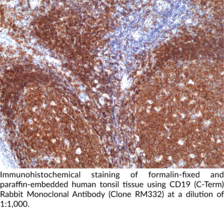
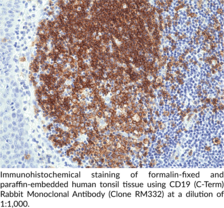
CD19 is a type I transmembrane protein and member of the immunoglobulin superfamily that functions as a B cell receptor (BCR) co-receptor.1,2 It is composed of an extracellular N-terminal domain containing two C2-type immunoglobulin-like (Ig-like) domains and several glycosylation sites, a transmembrane domain, and a C-terminal cytoplasmic domain containing nine tyrosine residues, which are subject to phosphorylation and mediate intracellular signaling. It is expressed on the surface of, and used as a marker for, B cells, and its expression increases during B cell maturation but decreases upon plasma cell differentiation.1,2,3 CD19 has important roles in B cell proliferation, differentiation, and survival.1 It associates with CD21, also known as complement receptor 2 (CR2), as well as CD82 and Leu-13, forming a multimeric complex that enhances BCR signaling.1,2 CD19 functions as an adaptor protein, recruiting various cytoplasmic signaling proteins to the cell membrane that activate numerous intracellular signaling pathways, including PI3K, MAPK, and NF-κB.1,2,4 CD19 protein levels are increased in tumor cells isolated from patients with a variety of cancers of B cell origin, including chronic myelocytic leukemia and B cell lymphomas, and decreased in B cells isolated from patients with systemic lupus erythematosus (SLE).5,6,3,2,1 Cayman’s CD19 (C-Term) Rabbit Monoclonal Antibody (Clone RM332) can be used for immunohistochemistry (IHC) and Western blot (WB) applications.
WARNING This product is not for human or veterinary use.
References & Product Citations
1. CD19, from bench to bedside. Immunol. Lett. 183, 86-95 (2017).
2. CD19: A biomarker for B cell development, lymphoma diagnosis and therapy. Exp. Hematol. Oncol. 1(1), 36 (2012).
3. A c-
4. Role of the CD19 and CD21/35 receptor complex in innate immunity, host defense and autoimmunity. Mechanisms of lymphocyte activation and immune regulation X 560, 125-139 (2005).
5. Expression of human B cell-
6. Peripheral B cell abnormalities in patients with systemic lupus erythematosus in quiescent phase: Decreased memory B cells and membrane CD19 expression. J. Autoimmun. 34(4), 426-434 (2010).
Contact Info
Cayman Chemical1180 East Ellsworth RoadAnn Arbor, Michigan 48108 USAToll Free: (800) 364-9897(USA and Canada only)Fax: (734) 971-3640


