
Technical Support & Resources
Visit our FAQ
Contact Us
Toll Free Phone (USA and Canada Only): (888) 526-5351
Direct Phone: (734) 975-3888
Product Categories
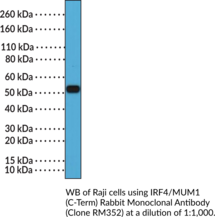
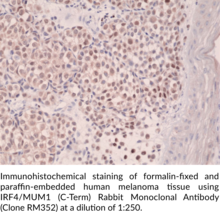
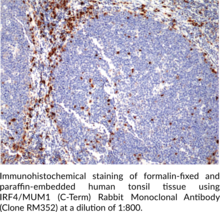
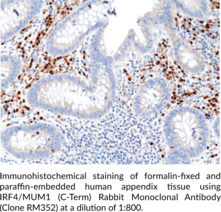
Technical Information
- Interferon Regulatory Factor 4
- LSIRF
- Lymphocyte-specific Interferon Regulatory Factor
- Multiple Myeloma Oncogene 1
Shipping & Storage Information
Recommended Products
Certificates of Analysis & Batch Specific Data
Provide batch numbers separated by commas to download or request available product inserts, QC sheets, certificates of analysis, data packs, and GC-MS data.

Visit Our Cancer Resource Center
Find Tools & Resources to Study the Hallmarks of Cancer
- Cancer cell signaling & regulation
- Cancer metabolism
- Tumor microenvironment
Product Description
Interferon regulatory factor 4 (IRF4), also known as multiple myeloma oncogene 1 (MUM1), is a transcription factor and member of the IRF family with roles in lymphocyte activation and the generation of immunoglobulin-secreting (Ig-secreting) plasma cells.1,2 It is composed of an N-terminal DNA binding domain, a linker domain, an interferon activation domain, and a C-terminal autoinhibitory region.3 IRF4 is primarily expressed in plasma cells and activated T cells but is also expressed in the heart, kidney, liver, and brain.2,3 Unlike other IRF transcription factors, IRF4 is not IFN-responsive and is activated by induction of the NF-κB pathway by various activators of lymphocyte activation and differentiation, such as LPS, concanavalin A (Item No. 14951), bacterial toxins, IL-4, and antigen receptor engagement.2 Irf4-/- mice lack Ig-secreting plasma cells, as well as exhibit defective T helper cell differentiation and decreased survival in a model of bacterial CpG-induced septic shock.4 IRF4 expression is associated with poor prognosis in patients with B cell chronic lymphocytic leukemia/small lymphocytic lymphoma (B-CLL/SLL).5 Cayman’s IRF4/MUM1 (C-Term) Rabbit Monoclonal Antibody (Clone RM352) can be used for immunohistochemistry (IHC) and Western blot (WB) applications.
WARNING This product is not for human or veterinary use.
References & Product Citations
1. IRF4 addiction in multiple myeloma. Nature 454(7201), 226-231 (2008).
2. MUM1/IRF4: A Review. Appl. Immunohistochem. Mol. Morphol. 18(4), 301-310 (2010).
3. Structural studies of IRF4 reveal a flexible autoinhibitory region and a compact linker domain. The Journal of Biological Chemisty 290(46), 27779-27790 (2015).
4. IRF4: Immunity. Malignancy! Therapy? Clin. Cancer Res. 15(9), 2954-2961 (2009).
5. MUM1/IRF4 expression is an unfavorable prognostic factor in B-
Contact Info
Cayman Chemical1180 East Ellsworth RoadAnn Arbor, Michigan 48108 USAToll Free: (800) 364-9897(USA and Canada only)Fax: (734) 971-3640


