
Technical Support & Resources
Visit our FAQ
Contact Us
Toll Free Phone (USA and Canada Only): (888) 526-5351
Direct Phone: (734) 975-3888
Technical Information
- m6A
Shipping & Storage Information
Recommended Products
Certificates of Analysis & Batch Specific Data
Provide batch numbers separated by commas to download or request available product inserts, QC sheets, certificates of analysis, data packs, and GC-MS data.

Visit Our Cancer Resource Center
Find Tools & Resources to Study the Hallmarks of Cancer
- Cancer cell signaling & regulation
- Cancer metabolism
- Tumor microenvironment
Product Description
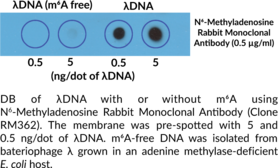
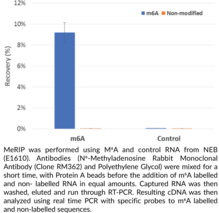
N6-Methyladenosine (m6A) is an abundant post-transcriptional RNA modification that is found in various classes of eukaryotic or viral RNA, including mRNA, rRNA, tRNA, snRNA, microRNA (miRNA), and long non-coding RNA (lncRNA).1,2 m6A modifications are enriched near stop codons of mRNA transcripts, increasing along the length of the coding region and decreasing after 3’-UTRs.1,3 m6A formation is a reversible process that occurs primarily in the nucleus.4 Its formation is catalyzed by a methyltransferase complex that is composed of the writers METTL3 and METTL14, which preferentially methylate RNA substrates with a GGACU domain, and the accessory protein Wilms tumor 1-associating protein (WTAP), which recruits target RNAs.1 m6A demethylation is mediated by the erasers fat mass and obesity-associated (FTO) protein and ALKBH5. Upon export into the cytosol, m6A modifications are recognized by a variety of reader proteins, including YTH-domain family (YTHDF) members, which regulate RNA translation. m6A modifications regulate multiple steps of RNA processing, including pre-mRNA splicing, nuclear export, translation, and decay, influencing a variety of critical cellular functions, such as differentiation, neurodevelopment, immunity, and oncogenesis.1,2,5 Global m6A mRNA levels are decreased in tumor tissue isolated from patients with endometrial cancer.6 Cayman’s N6-Methyladenosine Rabbit Monoclonal Antibody (Clone RM362) can be used for dot blot (DB), ELISA, and methylated RNA immunoprecipitation (MeRIP) applications.
WARNING This product is not for human or veterinary use.
References & Product Citations
1. A review in research progress concerning m6A methylation and immunoregulation. Front Immunol. 10, 922 (2019).
2. The role of m6A modification in physiology and disease. Cell Death Dis. 11(11), 960 (2020).
3. Comprehensive analysis of mRNA methylation reveals enrichment in 3' UTRs and near stop codons. Cell 149(7), 1635-1646 (2012).
4. Reading, writing and erasing mRNA methylation. Nav. Rev. Mol. Cell Biol. 20(10), 608-624 (2019).
5. The role of m6A RNA methylation in cancer. Biomed. Pharmacother. 112, 108613 (2019).
6. m6A mRNA methylation regulates AKT activity to promote the proliferation and tumorigenicity of endometrial cancer. Nat. Cell Biol. 20(9), 1074-1083 (2018).
Contact Info
Cayman Chemical1180 East Ellsworth RoadAnn Arbor, Michigan 48108 USAToll Free: (800) 364-9897(USA and Canada only)Fax: (734) 971-3640


