
Technical Support & Resources
Visit our FAQ
Contact Us
Toll Free Phone (USA and Canada Only): (888) 526-5351
Direct Phone: (734) 975-3888
Product Categories

Technical Information
- BAG Family Molecular Chaperone Regulator 1
- Bcl-2-associated Athanogene 1
Shipping & Storage Information
Recommended Products
Certificates of Analysis & Batch Specific Data
Provide batch numbers separated by commas to download or request available product inserts, QC sheets, certificates of analysis, data packs, and GC-MS data.
Kinase Resource Center
Discover Products & Resources for Kinase Research
- Kinase inhibitors, screening libraries, assay kits, & more
- Tools to study kinase signaling pathways:
- Growth factor signaling
- PI3K/Akt/mTOR
- MAPKs (ERK, p38, & JNK)
- JAK/STAT signaling
- Articles, resources, & advice
Product Description
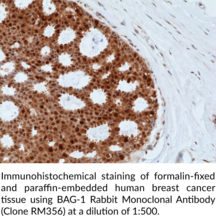
Bcl-2-associated athanogene 1 (BAG-1) is a co-chaperone protein and member of the BAG family of proteins that has anti-apoptotic activity.1 It is composed of an N-terminal ubiquitin-like (UBL) domain and a conserved C-terminal BAG domain. BAG-1 has four isoforms, with the short (BAG-1S), medium (BAG-1M), long (BAG-1L) isoforms generated via alternative translation initiation sites and a BAG-1 isoform generated by post-translational modification.2 BAG-1L contains a nuclear localization signal in addition to the UBL and BAG domains and is the only isoform not found primarily in the cytoplasm.1 All BAG-1 isoforms are expressed ubiquitously and interact the anti-apoptotic protein Bcl-2 to increase its activity.2,1 Under cell stress conditions, BAG-1 binds to the ATPase domain of Hsc70 or Hsp70 with its BAG domain and inhibits DNA synthesis and cell cycling. BAG-1 interacts with additional signaling proteins, including Raf-1, which activates ERK signaling and induces cell proliferation.1 Protein levels of BAG-1 are increased in patient-derived invasive breast carcinoma tissue but, in contrast, its expression is positively associated with increased survival in early-stage breast cancer patients.3,4 Cayman’s BAG-1 Rabbit Monoclonal Antibody (Clone RM356) can be used for immunohistochemistry (IHC) and Western blot (WB) applications. The antibody recognizes the short, medium, and long isoforms of BAG-1 from human samples.
WARNING This product is not for human or veterinary use.
References & Product Citations
1. What’s in the ‘BAG’? – a functional domain analysis of the BAG-
2. A BAG’s life: Every connection matters in cancer. Pharmacol. Ther. 209, 107498 (2020).
3. Expression of BAG-
4. BAG-
Contact Info
Cayman Chemical1180 East Ellsworth RoadAnn Arbor, Michigan 48108 USAToll Free: (800) 364-9897(USA and Canada only)Fax: (734) 971-3640


