
Technical Support & Resources
Visit our FAQ
Contact Us
Toll Free Phone (USA and Canada Only): (888) 526-5351
Direct Phone: (734) 975-3888
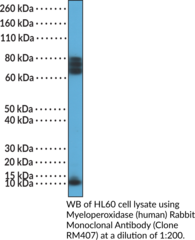
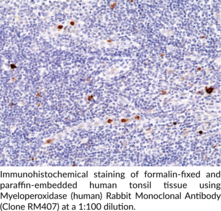
Technical Information
- MPO
Shipping & Storage Information
Recommended Products
Certificates of Analysis & Batch Specific Data
Provide batch numbers separated by commas to download or request available product inserts, QC sheets, certificates of analysis, data packs, and GC-MS data.
NET Formation Screening & Analysis Services
Our experts are here to help.
- Detection of NET formation ex vivo and screening for modulators using:
- High-content imaging
- Enzymatic detection
- Citrullination/carbamylation detection
- Experienced scientists skilled in neutrophil biology, isolation, and handling
Product Description
Myeloperoxidase (MPO) is a heme-containing enzyme and the most abundant protein in polymorphonuclear leukocytes (PMNs).1 It is composed of two subunits linked by a disulfide bridge with each subunit containing a light and a heavy polypeptide chain. It can oxidize a variety of substrates and catalyzes the formation of highly reactive (pseudo)hypohalous acids and radicals including hypochlorous acid. MPO is stored in azurophilic granules of PMNs and is released from activated or necrotic PMNs, after which it can bind to and modify acidic serum proteins, as well as recruit additional PMNs. MPO also has roles in PMN apoptosis and antimicrobial defense systems, including neutrophil extracellular traps (NETs).1,2,3 MPO-deficient mice exhibit reduced survival in a polymicrobial sepsis model, increased susceptibility to experimental autoimmune encephalomyelitis (EAE), and increased atherosclerosis in mice also deficient in the LDL receptor and fed an atherogenic diet.1,4,5 Cayman's Myeloperoxidase (human) Rabbit Monoclonal Antibody (Clone RM407) can be used for immunohistochemistry (IHC) and Western blot (WB) applications.
WARNING This product is not for human or veterinary use.
References & Product Citations
1. Human myeloperoxidase in innate and acquired immunity. Arch. Biochem. Biophys. 500(1), 92-106 (2010).
2. Myeloperoxidase is required for neutrophil extracellular trap formation: Implications for innate immunity. Blood 117(3), 953-959 (2011).
3. Neutrophil extracellular traps contain calprotectin, a cytosolic protein complex involved in host defense against Candida albicans. PLoS Pathog. 5(10), e1000639 (2009).
4. Mice lacking myeloperoxidase are more susceptible to experimental autoimmune encephalomyelitis. J. Neuroimmunol. 112(1-2), 97-105 (2001).
5. Increased atherosclerosis in myeloperoxidase-
Contact Info
Cayman Chemical1180 East Ellsworth RoadAnn Arbor, Michigan 48108 USAToll Free: (800) 364-9897(USA and Canada only)Fax: (734) 971-3640


