
Technical Support & Resources
Visit our FAQ
Contact Us
Toll Free Phone (USA and Canada Only): (888) 526-5351
Direct Phone: (734) 975-3888
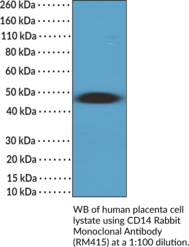
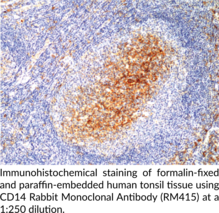
Technical Information
- Monocyte Differentiation Antigen CD14
- Myeloid Cell-specific Leucine-rich Glycoprotein
Shipping & Storage Information
Recommended Products
Certificates of Analysis & Batch Specific Data
Provide batch numbers separated by commas to download or request available product inserts, QC sheets, certificates of analysis, data packs, and GC-MS data.

Explore Obesity & Metabolic Disease Resources
Discover high-quality research tools to investigate GLP-1 mechanisms and next-generation metabolic targets.
OBESITY RESEARCH SOLUTIONSProduct Description
CD14 is a membrane glycoprotein, pattern recognition receptor, and co-receptor for several toll-like receptors (TLRs).1,2 It is composed of a C-terminal glycosylphosphatidylinositol (GPI) anchor, several sequences associated with LPS binding, and an N-terminal hydrophobic pocket containing leucine-rich repeats. CD14 is highly expressed on myeloid lineage cells, such as monocytes, dendritic cells, microglia, and macrophages, and is commonly used as a marker of monocyte differentiation.1 It is also expressed, to a lesser extent, in non-immune cells, and a soluble form of CD14 (sCD14) can be secreted in a protease-dependent or -independent manner to confer LPS-responsiveness to cells not expressing CD14. CD14 binds LPS in a concentration- and LPS chemotype-dependent manner to induce or suppress TLR-mediated LPS responses.1,3 It also binds to various pathogen-associated molecular patterns (PAMPs) and heat shock protein 70 (Hsp70) to induce innate immune responses and cytokine production, respectively. CD14 deficiency inhibits LPS-induced inflammation in mouse lung, intestine, and liver and is protective against LPS- or E. coli-induced lethal inflammation in mouse models of systemic septic shock. CD14 expression is upregulated in monocytes, adipocytes, and whole adipose tissue isolated from individuals with obesity and patients with diabetes mellitus.4 Cayman’s CD14 (C-Term) Rabbit Monoclonal Antibody (RM415) can be used for immunohistochemistry (IHC) and Western blot (WB) applications.
WARNING This product is not for human or veterinary use.
References & Product Citations
1. CD14: Biology and role in the pathogenesis of disease. Cytokine Growth Factor Rev. 48, 24-31 (2019).
2. Molecules in focus CD14. Int. J. Biochem. Cell Biol. 31, 545-549 (1998).
3. TLR4 and CD14 trafficking and its influence on LPS-
4. Circulating monocytes in patients with diabetes mellitus, arterial disease, and increased CD14 expression. Am. J. Cardiol. 85(11), 1288-1291 (2000).
Contact Info
Cayman Chemical1180 East Ellsworth RoadAnn Arbor, Michigan 48108 USAToll Free: (800) 364-9897(USA and Canada only)Fax: (734) 971-3640


