
Technical Support & Resources
Information provided in the product description is from published literature. Due to the nature of scientific experimentation, your results (e.g., selectivity and effective concentrations) or specific application for this product may differ. If you have questions about how this product fits your application, please contact our technical support staff.
Visit our FAQ
Contact Us
Toll Free Phone (USA and Canada Only): (888) 526-5351
Direct Phone: (734) 975-3888
Product Categories

Technical Information
- Eutannin
- NSC 69862
Shipping & Storage Information
Recommended Products


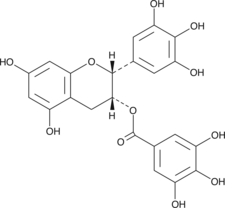

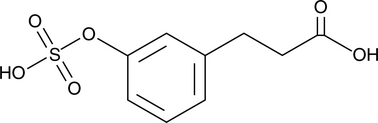
Certificates of Analysis & Batch Specific Data
Provide batch numbers separated by commas to download or request available product inserts, QC sheets, certificates of analysis, data packs, and GC-MS data.

Explore Obesity & Metabolic Disease Resources
Discover high-quality research tools to investigate GLP-1 mechanisms and next-generation metabolic targets.
OBESITY RESEARCH SOLUTIONSProduct Description
Chebulinic acid is an ellagitannin that has been found in T. chebula and has diverse biological activities.1,2,3,4,5 It is an inhibitor of protein tyrosine phosphatase non-receptor 9 (PTPN9) and PTPN11 (IC50s = 34 and 37 nM, respectively).2 Chebulinic acid (5 µM) increases glucose uptake in 3T3-L1 preadipocytes. It induces apoptosis of HL-60 and NB4 acute promyelocytic leukemia (APL), but not K562 chronic myelogenous leukemia (CML), cells (IC50s = 7.5, 5, and >60 µM, respectively).1 Chebulinic acid (25 µM) reduces the production of reactive oxygen species (ROS) induced by glyceraldehyde-related advanced glycation end products (glycer-AGEs) in human umbilical vein endothelial cells (HUVECs) and reduces glutamate-induced ROS production and cell death in HT22 mouse hippocampal cells.3,4 It inhibits H+/K+-ATPase activity (IC50 = 65.01 µg/ml) and reduces free and total gastric acidity, as well as increases gastric mucin secretion, in various rat models of gastric ulcer.5
WARNING This product is not for human or veterinary use.
References & Product Citations
1. Chebulinic acid isolated from the fruits of Terminalia chebula specifically induces apoptosis in acute myeloid leukemia cells. Phytother. Res. 31(12), 1849-1857 (2017).
2. Identification of chebulinic acid as a dual targeting inhibitor of protein tyrosine phosphatases relevant to insulin resistance. Bioorg. Chem. 90, 103087 (2019).
3. Preventive effects of chebulic acid isolated from Terminalia chebula on advanced glycation endproduct-
4. Chebulinic acid attenuates glutamate-
5. Anti-
Contact Info
Cayman Chemical1180 East Ellsworth RoadAnn Arbor, Michigan 48108 USAToll Free: (800) 364-9897(USA and Canada only)Fax: (734) 971-3640


