
Technical Support & Resources
Visit our FAQ
Contact Us
Toll Free Phone (USA and Canada Only): (888) 526-5351
Direct Phone: (734) 975-3888
Product Categories
Application
Technical Information
- nr1c3
- PPARG
- PPARγ
Shipping & Storage Information
Recommended Products
Certificates of Analysis & Batch Specific Data
Provide batch numbers separated by commas to download or request available product inserts, QC sheets, certificates of analysis, data packs, and GC-MS data.


Visit Our Environmental Toxicology Resource Center
Explore additional resources to study natural toxins, pollutants including PFAS and 6-PPD-Q, and their biological effects.
ENVIRONMENTAL TOXICOLOGY TOOLS & SERVICESProduct Description
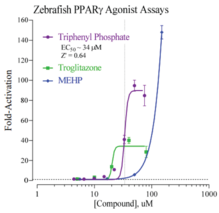
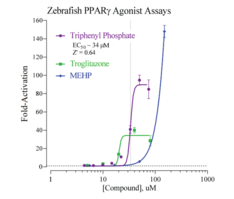
INDIGO’s Zebrafish Peroxisome Proliferator Activated Receptor Gamma Reporter Assay System utilizes proprietary mammalian cells engineered to provide constitutive, high-level expression of Zebrafish (Danio rerio) PPARγ (nr1c3), a ligand-dependent transcription factor.
INDIGO's Reporter Cells include the luciferase reporter gene functionally linked to an zPPARγ-responsive promoter. Thus, quantifying changes in luciferase expression in the test sample-treated reporter cells provides a sensitive surrogate measure of changes in zPPARγ activity. The principal application of this assay is in the screening of test samples to quantify any functional bioactivity that they may exert against zebrafish PPARγ. In particular, zebrafish reporter assays are frequently used in the monitoring of environmental samples for the presence of biohazardous chemical pollutants, such as endocrine disruptors.
Peroxisome proliferator-activated receptor gamma (PPAR-gamma or PPARγ), also known as the glitazone receptor, or NR1C3 (nuclear receptor subfamily 1, group C, member 3) is a type II nuclear receptor that in humans is encoded by the PPARG gene. PPARs form heterodimers with retinoid X receptors (RXRs) and these heterodimers regulate transcription of various genes. PPARγ regulates adipocyte differentiation, fatty acid storage and glucose metabolism. The PPARγ knockout mice fail to generate adipose tissue when fed a high fat diet. Many insulin sensitizing drugs used in the treatment of diabetes target PPARγ as a means to lower serum glucose without increasing pancreatic insulin secretion. Additionally, PPARγ has been implicated in the pathology of numerous diseases including obesity, diabetes, atherosclerosis and cancer. Alternatively spliced transcript variants that encode different isoforms have been described.
[INDIGO Catalog Nos. Z00101-32, Z00101]
WARNING This product is not for human or veterinary use.
Contact Info
Cayman Chemical1180 East Ellsworth RoadAnn Arbor, Michigan 48108 USAToll Free: (800) 364-9897(USA and Canada only)Fax: (734) 971-3640


