

Cortisol ELISA
PFAS
6-PPD-Q
Fumonisin
Environmental Toxicology Research Tools
Featured Products & Services for Environmental Toxicology Research
Environmental Toxicology Analysis Services
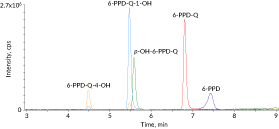
Detect environmental contaminants with LC-MS services for the quantification of PFAS or 6-PPD, 6-PPD-Q, and metabolites in samples.
LEARN MOREMicrocystin ELISA Kit
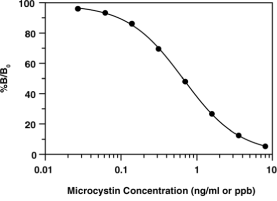
A competitive ELISA for the quantification of microcystins.
- Detect microcystins in various natural water samples, serum, and tissue homogenates
- Measure microcystin levels in natural water samples down to 27.4 pg/ml
6-PPD-Q Standards Set
Designed for use as reference standards for analytical testing of 6-PPD-Q in environmental samples by LC-MS using the EPA’s Draft Method 1634.
LEARN MORECortisol ELISA Kit (Express)
A fast, convenient assay for the quantification of cortisol.
- Measure cortisol in plasma, urine, saliva, feces, and hair
- Lower limit of detection = 20 pg/ml
- Rapid assay; get results in <4 hours
Mycotoxin Mixture 5 (CRM)
A CRM mixture of aflatoxin B1, B2, G1, G2, and ochratoxin A.
LEARN MOREPerfluorooctanesulfonic Acid (PFOS)
A perfluoroalkyl substance (PFAS).
LEARN MOREPesticide Screening Library (96-Well)
For screening ~174 pesticide-associated compounds.
LEARN MORENatural Toxins
Microcystins
Hepatotoxic microcystins produced by cyanobacteria are primarily found in water and pose health hazards to animals and humans.
VIEW ALL MICROCYSTINSMarine Toxins
Marine toxins, often associated with harmful algal blooms (HABs), are produced by various species of phytoplankton, as well as other marine organisms. Many of these toxins can accumulate in shellfish or fish and pose risks to humans and animals through ingestion of contaminated seafood.
VIEW ALL MARINE TOXINSMycotoxins
Mycotoxins can cause acute and chronic health issues in humans and animals. Common exposure routes include fungal contamination of building materials, agricultural crops, and animal feed. Mycotoxins of particular concern include aflatoxins, ochratoxins, fumonisins, zearalenone, patulin, gliotoxins, and trichothecenes such as deoxynivalenol and satratoxins. Cayman offers an expansive collection of mycotoxins, metabolites, and isotopically labeled standards to support mycotoxin research.
VIEW ALL MYCOTOXINSEnvironmental Toxicants
PFAS
Per- and polyfluoroalkyl substances (PFAS) are used in numerous consumer products and industrial applications, including firefighting foams, food packaging, nonstick cookware, and cosmetics. Their high stability and widespread use contribute to their pervasive presence and persistence in the environment, as well as living organisms.
- Pentadecafluorooctanoic Acid (PFOA)
- Perfluorooctanesulfonic Acid (PFOS)
- Perfluorohexanesulfonic Acid (PFHxS)
Environmental Toxicology Analysis Services
Cayman offers state-of-the-art LC-MS services to quantify environmental contaminants and metabolites in biological samples. Our methods can be adapted to include additional analytes or to analyze other types of biological or environmental samples.
LEARN MORE ABOUT OUR SERVICESPer- and Polyfluoroalkyl Substances (PFAS)
Quantify 18 different PFAS chemicals
VIEW PANEL DETAILS (PDF)Toxic Products from Tire Antidegradants
Quantify 6-PPD, 6-PPD-Q, and several metabolites
VIEW PANEL DETAILS (PDF)PPDs & PPD-Qs
N,N’-Disubstituted p-phenylenediamines (PPDs) are used as antioxidants and antiozonants in tires and other rubber products to protect against oxidative degradation. Their extensive use has resulted in widespread release of these compounds and their degradation products into the environment. Of particular concern are 6-PPD and its ozonation byproduct, 6-PPD-quinone (6-PPD-Q), which is highly toxic to certain aquatic organisms such as coho salmon. Cayman offers various PPDs, degradation products, metabolites, isotopically labeled standards, and services to study these compounds.
VIEW ALL PPDs & PPD-QsDioxins
Polychlorinated dibenzo-p-dioxins (PCDDs), polychlorinated dibenzofurans (PCDFs), and dioxin-like polychlorinated biphenyls (PCBs) are persistent organic pollutants primarily produced by anthropogenic activities such as waste incineration, combustion events, and certain industrial processes. Their high toxicity, capacity for bioaccumulation, and persistence in the environment pose significant environmental and health risks.
VIEW ALL DIOXINSHeavy Metals
Toxic heavy metals and metalloids are persistent environmental pollutants in aquatic and terrestrial ecosystems that can bioaccumulate. They are released into the environment through natural sources, such as volcanic eruptions, as well as anthropogenic activities including mining, industrial processes, and agricultural activities.
VIEW ALL HEAVY METAL RESEARCH TOOLSPesticides
While pesticides are useful for increasing agricultural yields and decreasing the spread of insect vectors of disease, contamination of food, water, soil, and air can lead to acute and chronic health effects in non-target organisms, including humans and animals. Cayman offers pesticides, metabolites, and isotopically labeled standards to support pesticide research.
VIEW ALL PESTICIDESMeasuring Biological Effects
Dioxins Activate the AhR
Polycyclic aromatic hydrocarbons and persistent organic pollutants, particularly dioxins, primarily exert their biological and toxic effects through activation of the aryl hydrocarbon receptor (AhR). Cayman offers cell-based reporter assays to screen test samples for activity against AhR.
VIEW ALL AhR REPORTER ASSAYSHormones & Hormone Receptors
Some environmental contaminants, including polychlorinated biphenyls (PCBs), PFAS, certain pesticides, and plasticizers such as phthalates and bisphenols are considered endocrine-disrupting chemicals (EDCs). EDCs can affect endocrine function by disrupting hormone synthesis, transport, and metabolism and/or altering hormone receptor signaling. Certain organic pollutants have also been shown to increase levels of the stress hormone cortisol in fish. Alterations to hormone function can result in a variety of adverse effects on reproduction, energy metabolism, the thyroid system, and stress responses.
Vitellogenin: A Biomarker for Estrogenic Compounds in Aquatic Ecosystems
In aquatic ecosystems, increased levels of vitellogenin in male fish serves as a biomarker for environmental exposure to EDCs with estrogenic activity. Cayman offers a variety of ELISA kits, antibodies, and protein standards to measure vitellogenin levels in numerous species.
VIEW ALL VITELLOGENIN PRODUCTS

Cayman Services
Chemical Synthesis
With diverse expertise in synthetic organic chemistry, isotopic labeling, and natural product isolation, Cayman’s chemists can evaluate the best route to produce additional standards, pollutants, toxins, and metabolites of interest.
Analytical Chemistry
Our mass spectrometry-based analytical services provide detection and quantification of environmental contaminants, metabolites, and biomarkers in biological and environmental samples.
Bioanalysis & Assay Development
Our experts can analyze your samples using a variety of assay formats, including biochemical, cell-based, and immunoassays, with custom and high-throughput options available.
Sales
Reach out to our sales team for help with custom quantities & formulations, bulk requests, or general questions.
Subscribe to Our Emails
Stay up to date on the latest environmental toxicology products, services, and resources from Cayman.