
Technical Support & Resources
Visit our FAQ
Contact Us
Toll Free Phone (USA and Canada Only): (888) 526-5351
Direct Phone: (734) 975-3888
Product Categories
Application
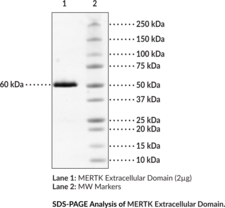
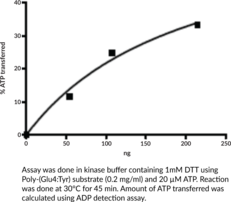
Technical Information
- MER
- c-Mer
- Proto-oncogene c-Mer
- Receptor Tyrosine Kinase MerTK
- RP38
- Tyrosine-protein Kinase Mer
Shipping & Storage Information
Recommended Products
Certificates of Analysis & Batch Specific Data
Provide batch numbers separated by commas to download or request available product inserts, QC sheets, certificates of analysis, data packs, and GC-MS data.
Kinase Resource Center
Discover Products & Resources for Kinase Research
- Kinase inhibitors, screening libraries, assay kits, & more
- Tools to study kinase signaling pathways:
- Growth factor signaling
- PI3K/Akt/mTOR
- MAPKs (ERK, p38, & JNK)
- JAK/STAT signaling
- Articles, resources, & advice
Product Description
MERTK is a TAM family receptor tyrosine kinase with roles in macrophage activation, apoptotic cell engulfment, and platelet aggregation.1,2 It is composed of an extracellular domain, which contains two immunoglobulin-like (Ig-like) domains and two FNIII domains, and an intracellular tyrosine kinase domain.1 MERTK is expressed at low levels in the brain in oligodendrocytes, astrocytes, and microglia, as well as in the heart and skeletal muscle, and at high levels in the ovary, prostate, testis, lung, retina, and kidney. It is also expressed in platelets, megakaryocytes, dendritic cells, natural killer (NK) cells, monocytes, and macrophages.3 Membrane-bound MERTK can be cleaved by a metalloproteinase to release the extracellular domain as a soluble form of MERTK (sMer), which binds the MERTK activating ligand Gas6 to block Gas6-mediated MERTK activation, leading to defective macrophage-mediated engulfment of apoptotic cells and decreased platelet aggregation.2 Mutations in MERTK are associated with severe disease in patients with inherited retinal disease.4 Cayman’s MERTK Extracellular Domain (human, recombinant) can be used for enzyme activity assay applications.
WARNING This product is not for human or veterinary use.
References & Product Citations
1. Targeting Tyro3, Axl and MerTK (TAM receptors): Implications for macrophages in the tumor microenvironment. Mol. Cancer 18(1), 94 (2019).
2. A soluble form of the Mer receptor tyrosine kinase inhibits macrophage clearance of apoptotic cells and platelet aggregation. Blood 109(3), 1026-1033 (2007).
3. TAM receptor pathways at the crossroads of neuroinflammation and neurodegeneration. Dis. Markers 2387614 (2019).
4. MERTK mutation update in inherited retinal diseases. Hum. Mutat. 39(7), 887-913 (2018).
Contact Info
Cayman Chemical1180 East Ellsworth RoadAnn Arbor, Michigan 48108 USAToll Free: (800) 364-9897(USA and Canada only)Fax: (734) 971-3640


