
Technical Support & Resources
Visit our FAQ
Contact Us
Toll Free Phone (USA and Canada Only): (888) 526-5351
Direct Phone: (734) 975-3888
Product Categories
Technical Information
- Neurotrophic Receptor Tyrosine Kinase
- Tropomyosin-related Kinase
Shipping & Storage Information
Recommended Products
Certificates of Analysis & Batch Specific Data
Provide batch numbers separated by commas to download or request available product inserts, QC sheets, certificates of analysis, data packs, and GC-MS data.

Explore Obesity & Metabolic Disease Resources
Discover high-quality research tools to investigate GLP-1 mechanisms and next-generation metabolic targets.
OBESITY RESEARCH SOLUTIONSProduct Description
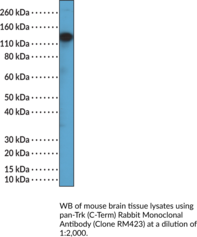
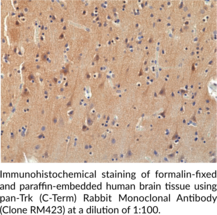
Tropomyosin-related kinase A (TrkA), TrkB, and TrkC are transmembrane receptors that are encoded by NTRK1, NTRK2, and NTRK3, respectively, in humans with roles in neuronal cell differentiation and survival, synaptic formation and plasticity, memory formation and retention, proprioception, and nociception.1,2 They are composed of an extracellular domain containing two cysteine-rich clusters, three Trk-specific leucine-rich repeats, and two immunoglobulin-like domains, a transmembrane region, and an intracellular tyrosine kinase domain.2 Trks are expressed in neuronal tissue and have essential roles in embryonic development and nervous system function. Binding of neurotrophins to Trks induces receptor dimerization and autophosphorylation. This induces activation of the intracellular kinase domain, enabling docking of cytoplasmic adaptor proteins and enzymes to facilitate downstream intracellular signaling events via the ERK/MAPK, PI3K, and PLCγ pathways. Loss-of-function mutations in NTRK1 are associated with autonomic and sensory neuronal disorders, such as congenital insensitivity to pain with anhidrosis, while loss-of-function mutations in NTRK2 are associated with loss of appetite control, obesity, and defects in learning and memory. NTRK3-ETV6 gene fusions are pathognomonic in infantile fibrosarcoma and congenital mesoblastic nephroma.2,3 Cayman’s pan-Trk (C-Term) Rabbit Monoclonal Antibody (Clone RM423) can be used for immunohistochemistry (IHC) and Western blot (WB) applications.
WARNING This product is not for human or veterinary use.
References & Product Citations
1. Targeting TRK family proteins in cancer. Pharmacol. Ther. 173, 58-66 (2017).
2. Tropomyosin receptor kinase (TRK) biology and the role of NTRK gene fusions in cancer. Ann. Oncol. 30(Suppl_8), viii5-viii15 (2019).
3. TRK inhibitors in TRK fusion-
Contact Info
Cayman Chemical1180 East Ellsworth RoadAnn Arbor, Michigan 48108 USAToll Free: (800) 364-9897(USA and Canada only)Fax: (734) 971-3640


