
Technical Support & Resources
Visit our FAQ
Contact Us
Toll Free Phone (USA and Canada Only): (888) 526-5351
Direct Phone: (734) 975-3888
Product Categories
Application


Technical Information
- Transmembrane Protein 16A
Shipping & Storage Information
Recommended Products
Certificates of Analysis & Batch Specific Data
Provide batch numbers separated by commas to download or request available product inserts, QC sheets, certificates of analysis, data packs, and GC-MS data.
Kinase Resource Center
Discover Products & Resources for Kinase Research
- Kinase inhibitors, screening libraries, assay kits, & more
- Tools to study kinase signaling pathways:
- Growth factor signaling
- PI3K/Akt/mTOR
- MAPKs (ERK, p38, & JNK)
- JAK/STAT signaling
- Articles, resources, & advice
Product Description
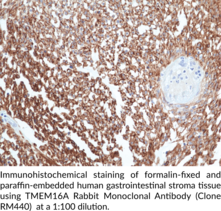
Transmembrane protein 16A (TMEM16A), also known as anoctamin-1 (ANO1) or discovered on gastrointestinal stromal tumors 1 (DOG1), is a calcium-activated chloride channel (CaCC) encoded by ANO1 that has roles in several cellular functions, including proliferation, survival, and migration, as well as cell secretion and airway and vascular smooth muscle contraction.1 It exists as a homodimer where each monomer is composed of cytosolic N- and C-terminal domains and a transmembrane domain that has ten membrane-spanning segments, which contain the calcium-binding sites and form the ion channel pore.2,3 It is expressed by a variety of cells, including epithelial, vascular endothelial, neuronal, smooth muscle, and myocardial cells, and localizes to the plasma membrane.1,4 TMEM16A levels are increased by several stimuli, including IL-4, IL-6, and IL-13, as well as EGF, angiotensin II, and LPS, in a cell-dependent manner.1 TMEM16A activation is induced by increased intracellular calcium levels, which occurs via calcium influx through calcium-permeable ion channels or calcium release from the endoplasmic reticulum.5 It induces chloride ion transport, the direction of which is dependent on the membrane potential and intracellular chloride concentration, which modulates numerous cellular processes, including membrane depolarization and EGFR, ERK1/2, and NF-κB signaling pathways.1,4 Intratumoral TMEM16A protein expression is increased relative to adjacent normal tissue and associated with lymph node metastasis and reduced overall survival in patients with gastric cancer.6 Cayman's TMEM16A Rabbit Monoclonal Antibody (Clone RM440) can be used for immunohistochemistry (IHC).
WARNING This product is not for human or veterinary use.
References & Product Citations
1. Calcium-
2. Recent advances in TMEM16A: Structure, function, and disease. J. Cell. Physiol. 234(6), 7856-7873 (2019).
3. Structure and function of ion channels regulating sperm motility—An overview. Int. J. Mol. Sci. 22(6), 3259 (2021).
4. The diverse roles of TMEM16A Ca2+-
5. Cell-
6. TMEM16A overexpression contributes to tumor invasion and poor prognosis of human gastric cancer through TGF-
Contact Info
Cayman Chemical1180 East Ellsworth RoadAnn Arbor, Michigan 48108 USAToll Free: (800) 364-9897(USA and Canada only)Fax: (734) 971-3640


