
Technical Support & Resources
Visit our FAQ
Contact Us
Toll Free Phone (USA and Canada Only): (888) 526-5351
Direct Phone: (734) 975-3888
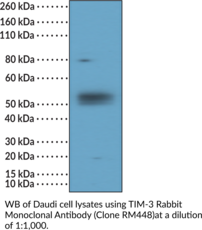
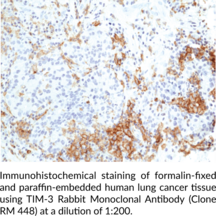
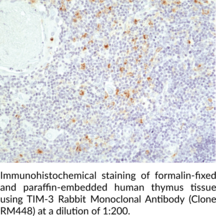
Technical Information
- CD366
- Hepatitis A Virus Cellular Receptor 2 Precursor
- KIM-3
- T Cell Immunoglobulin and Mucin Domain-containing Protein 3
- T Cell Immunoglobulin Mucin Receptor 3
- T Cell Membrane Protein 3
- TIMD-3
Shipping & Storage Information
Recommended Products
Certificates of Analysis & Batch Specific Data
Provide batch numbers separated by commas to download or request available product inserts, QC sheets, certificates of analysis, data packs, and GC-MS data.

Visit Our Cancer Resource Center
Find Tools & Resources to Study the Hallmarks of Cancer
- Cancer cell signaling & regulation
- Cancer metabolism
- Tumor microenvironment
Product Description
TIM-3 is a member of the T-cell immunoglobulin and mucin-domain containing (TIM) protein family of immunoregulatory proteins and is encoded by the HAVCR2 gene in humans.1 It is a transmembrane protein composed of an N-terminal immunoglobulin variable (IgV) domain, as well as mucin stalk, transmembrane, and C-terminal cytoplasmic tail domains. The IgV domain contains cysteine residues that form non-canonical intramolecular disulfide bonds resulting in a cleft and channel not found in non-TIM immunoglobulin domains that is important for non-canonical ligand binding.2 TIM-3 is expressed primarily on T cells but is also expressed on other immune cells such as natural killer and dendritic cells.3 The TIM-3 ligand galectin 9 (Item No. 32012), located on immune or tumor cells, binds to glycosylated sites of the IgV and mucin stalk domains and induces TIM-3 oligomerization to activate downstream signaling that impairs immune synapse formation and leads to T cell anergy or apoptosis.1 The TIM-3 IgV cleft domain binds non-canonical ligands, such as phosphatidylserine on apoptotic cells or CEACAM1 on antigen-presenting or tumor cells.2,1,3 TIM-3 is an inhibitory co-receptor that helps maintain immune tolerance but, when expressed on certain cells during chronic infection or cancer, can lead to immune exacerbation.3 Inhibition of the TIM-3 pathway by Tim-3 fusion or extracellular domain-only proteins prevents the induction of immune tolerance in a mouse islet allograft model or increases weight loss and tissue injury in a mouse model of TNBS-induced colitis, respectively.4,5 Expression of TIM-3 is decreased in patients with autoimmune diseases, including ulcerative colitis.1,6 TIM-3 is expressed on tumor-infiltrating T cells and expressed on a higher proportion of regulatory T cells from cancer patients.1 Its overexpression on T cells increases tumor progression in an EL4 mouse model of lymphoma, while TIM-3 inhibition decreases tumor growth in a mouse model of head and neck cancer. SNPs in HAVCR2 are associated with allergic diseases, immunity, and cancer. Cayman's TIM-3 Rabbit Monoclonal Antibody (Clone RM448) can be used for immunohistochemistry (IHC) and Western blot (WB) applications.
WARNING This product is not for human or veterinary use.
References & Product Citations
1. TIM3 comes of age as an inhibitory receptor. Nat. Rev. Immunol. 20(3), 173-185 (2020).
2. T cell immunoglobulin mucin-
3. T cell/transmembrane, Ig, and mucin-
4. Tim-
5. Involvement of T cell Ig Mucin-
6. Dysregulated Tim-
Contact Info
Cayman Chemical1180 East Ellsworth RoadAnn Arbor, Michigan 48108 USAToll Free: (800) 364-9897(USA and Canada only)Fax: (734) 971-3640


