
Technical Support & Resources
Visit our FAQ
Contact Us
Toll Free Phone (USA and Canada Only): (888) 526-5351
Direct Phone: (734) 975-3888
Product Categories

Technical Information
- Signal Transducer and Activator of Transcription 3
Shipping & Storage Information
Recommended Products
Certificates of Analysis & Batch Specific Data
Provide batch numbers separated by commas to download or request available product inserts, QC sheets, certificates of analysis, data packs, and GC-MS data.
Kinase Resource Center
Discover Products & Resources for Kinase Research
- Kinase inhibitors, screening libraries, assay kits, & more
- Tools to study kinase signaling pathways:
- Growth factor signaling
- PI3K/Akt/mTOR
- MAPKs (ERK, p38, & JNK)
- JAK/STAT signaling
- Articles, resources, & advice
Product Description
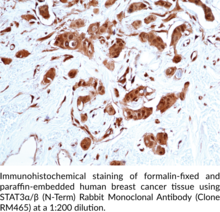
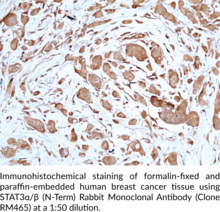
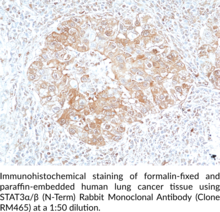
STAT3 is a ubiquitously expressed transcription factor and member of the STAT protein family that has roles in a variety of cellular functions including proliferation, apoptosis, and differentiation, as well as innate and adaptive immunity and stem cell pluripotency.1,2,3 It contains N-terminal, coiled-coil, DNA binding, and linker domains that mediate nuclear translocation and export, as well as Src homology 2 (SH2) and C-terminal transactivation domains that are subject to phosphorylation.4,5 Alternative splicing of STAT3 pre-mRNA leads to the formation of the full-length isoform STAT3α, as well as STAT3β, a truncated isoform that lacks a portion of the transactivation domain and is considered a dominant-negative regulator of STAT3 transcriptional activation.6 STAT3 signaling is inhibited by the negative regulator suppressor of cytokine signaling 3 (SOCS-3) and prevents excessive STAT3 activation.2 Phosphorylation of STAT3 at tyrosine 705 (Tyr705) is mediated by JAKs in response to stimulation with cytokines or growth factors and induces STAT3 dimerization and nuclear translocation, leading to STAT3-dependent gene transcription.2,1 Cayman's STAT3α/β Rabbit Monoclonal Antibody (Clone RM465) can be used for immunohistochemistry (IHC) and Western blot (WB) applications.
WARNING This product is not for human or veterinary use.
References & Product Citations
1. Signal transducer and activator of transcription 3: A year in review. Curr. Opin. Hematol. 23(1), 23-27 (2016).
2. Targeting STAT3 in cancer with nucleotide therapeutics. Cancers 11(11), 1681 (2019).
3. Essential role of STAT3 for embryonic stem cell pluripotency. Proc. Natl. Acad. Sci. USA 96(6), 2846-2851 (1999).
4. New activation modus of STAT3: A tyrosine-
5. Structural biology of STAT3 and its implications for anticancer therapies development. Int. J. Mol. Sci. 19(6), 1591 (2018).
6. The STAT3 isoforms α and β have unique and specific functions. Nat. Immunol. 5(4), 401-409 (2004).
Contact Info
Cayman Chemical1180 East Ellsworth RoadAnn Arbor, Michigan 48108 USAToll Free: (800) 364-9897(USA and Canada only)Fax: (734) 971-3640


