
Technical Support & Resources
Visit our FAQ
Contact Us
Toll Free Phone (USA and Canada Only): (888) 526-5351
Direct Phone: (734) 975-3888
Product Categories
Technical Information
- CD204
- Macrophage Scavenger Receptor 1
- SCARA1
- SR-A
Shipping & Storage Information
Recommended Products
Certificates of Analysis & Batch Specific Data
Provide batch numbers separated by commas to download or request available product inserts, QC sheets, certificates of analysis, data packs, and GC-MS data.

Explore Obesity & Metabolic Disease Resources
Discover high-quality research tools to investigate GLP-1 mechanisms and next-generation metabolic targets.
OBESITY RESEARCH SOLUTIONSProduct Description
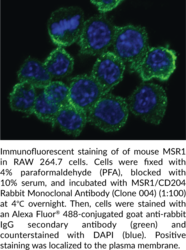
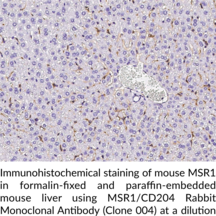
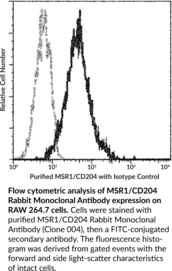
Macrophage scavenger receptor 1 (MSR1), also known as CD204, is a homotrimeric transmembrane glycoprotein and class A scavenger receptor with roles in innate and adaptive immunity, and various pathophysiological processes, including non-alcoholic fatty liver disease (NAFLD).1,2 It is primarily expressed on the surface of macrophages and dendritic cells but is also present on the surface of lymphocytes.2 MSR1 binds to a variety of ligands, including apolipoprotein E (ApoE), LDL, type III collagen, cholesterol, apoptotic cells, and pathogens, and induces intracellular signaling in a ligand-specific manner, to mediate phagocytosis, endocytosis, and lipid uptake. Levels of MSR1 are increased and associated with the incidence of hepatic steatosis, cirrhosis, and hepatocellular carcinoma in patients with NAFLD. An increased population of MSR1+ tumor-associated macrophages (TAMs) in tumor stroma compared with the primary tumor is correlated with poor prognosis and shorter survival time in patients with non-small cell lung cancer (NSCLC), uterine cervical adenocarcinoma, glioma, or muscle-invasive bladder cancer.1 Cayman’s MSR1/CD204 Rabbit Monoclonal Antibody (Clone 004) can be used for flow cytometry (FC), immunocytochemistry (ICC), immunofluorescence (IF), and immunohistochemistry paraffin (IHC-P) applications.
WARNING This product is not for human or veterinary use.
References & Product Citations
1. The role of macrophage scavenger receptor 1 (MSR1) in inflammatory disorders and cancer. Front. Immunol. 13, 1012002 (2002).
2. Role of macrophage scavenger receptor MSR1 in the progression of non-
Contact Info
Cayman Chemical1180 East Ellsworth RoadAnn Arbor, Michigan 48108 USAToll Free: (800) 364-9897(USA and Canada only)Fax: (734) 971-3640


