
Technical Support & Resources
Visit our FAQ
Contact Us
Toll Free Phone (USA and Canada Only): (888) 526-5351
Direct Phone: (734) 975-3888
Product Categories
Technical Information
- ASGPR1
- ASGR1
- C-type Lectin Domain Family 4 Member H1
- CLEC4H1
- Hepatic Lectin H1
- HL-1
Shipping & Storage Information
Recommended Products
Certificates of Analysis & Batch Specific Data
Provide batch numbers separated by commas to download or request available product inserts, QC sheets, certificates of analysis, data packs, and GC-MS data.

Visit Our Lipid Nanoparticle Resource Center for Additional Tools & Resources
EXPLORE NOWProduct Description
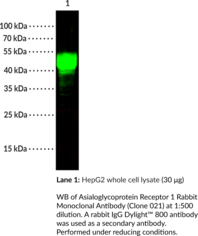
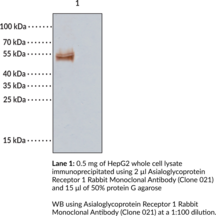
Asialoglycoprotein receptor 1 is a calcium-dependent C-type lectin receptor.1 It is composed of a carbohydrate recognition domain, which primarily recognizes galactosides such as D-galactose and N-acetyl-D-galactosamine (GalNAc), stalk region, transmembrane domain, and cytoplasmic domain. Asialoglycoprotein receptor 1 is expressed in hepatocytes and alternative splicing produces both long and short isoforms.2 The long isoform localizes to the cell membrane, while the short isoform exists as a soluble form that is both secreted and found in the cytoplasm. The asialoglycoprotein receptor is a trimer that is commonly formed by two H1 subunits and one H2 subunit.1 It is involved in the clearance of desialylated serum glycoproteins and hepatotropic virus entry via endocytosis. Ectopic expression of the gene encoding asialoglycoprotein receptor 1 (ASGR1) increases binding of hepatitis E virus to cells in vitro.3 Knockdown of ASGR1 increases survival and decreases liver injury and plasma TNF-α and IL-1β levels in a mouse model of sepsis.4 Decreased protein levels of asialoglycoprotein receptor 1 negatively correlate with hepatocellular carcinoma tumor grade.5 The asialoglycoprotein receptor has been used as a target of galactosylated drug conjugates and various lipid-based drug delivery (LBDD) platforms, including lipid nanoparticles (LNPs), liposomes, and micelles, for therapeutic and imaging applications.1 Cayman’s Asialoglycoprotein Receptor 1 Rabbit Monoclonal Antibody (Clone 021) can be used for ELISA (capture), immunoprecipitation (IP), and Western blot (WB) applications. The antibody recognizes asialoglycoprotein receptor 1 at 33 kDa from human samples. However, due to lipidation, glycation, and phosphorylation the antibody may recognize asialoglycoprotein receptor 1 at approximately 45-50 kDa.
WARNING This product is not for human or veterinary use.
References & Product Citations
1. Asialoglycoprotein receptor and targeting strategies. Targeted intracellular drug delivery by receptor mediated endocytosis 39, 353-382 (2019).
2. A new splice variant of the major subunit of human asialoglycoprotein receptor encodes a secreted form in hepatocytes. PLoS One 5(9), e12934 (2010).
3. Asialoglycoprotein receptor facilitates infection of PLC/PRF/5 cells by HEV through interaction with ORF2. J. Med. Virol. 88(12), 2186-2195 (2016).
4. ASGR1 promotes liver injury in sepsis by modulating monocyte-
5. Expression of asialoglycoprotein receptor 1 in human hepatocellular carcinoma. J. Histochem. Cytochem. 61(12), 901-909 (2013).
Contact Info
Cayman Chemical1180 East Ellsworth RoadAnn Arbor, Michigan 48108 USAToll Free: (800) 364-9897(USA and Canada only)Fax: (734) 971-3640


