
Technical Support & Resources
Visit our FAQ
Contact Us
Toll Free Phone (USA and Canada Only): (888) 526-5351
Direct Phone: (734) 975-3888
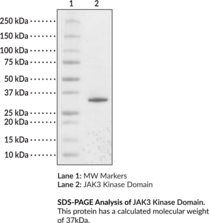
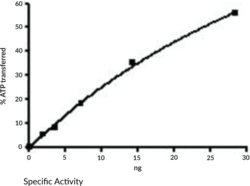
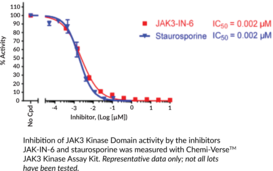
Technical Information
- Janus-Associated Kinase 3
- Leukocyte Janus Kinase
- L-JAK
- Tyrosine-protein Kinase JAK3
Shipping & Storage Information
Recommended Products
Certificates of Analysis & Batch Specific Data
Provide batch numbers separated by commas to download or request available product inserts, QC sheets, certificates of analysis, data packs, and GC-MS data.
Kinase Resource Center
Discover Products & Resources for Kinase Research
- Kinase inhibitors, screening libraries, assay kits, & more
- Tools to study kinase signaling pathways:
- Growth factor signaling
- PI3K/Akt/mTOR
- MAPKs (ERK, p38, & JNK)
- JAK/STAT signaling
- Articles, resources, & advice
Product Description
JAK3 is a non-receptor tyrosine kinase that has roles in cytokine signaling and immune cell function.1,2 It is composed of N-terminal FERM and SH2 domains, a regulatory JH2 pseudokinase domain, and a C-terminal kinase domain.2,3 JAK3 is constitutively expressed in natural killer (NK) cells and thymocytes and expressed upon cell activation in T cells, B cells, and monocytes.4 Following cytokine binding to the IL-2 receptor (IL-2R), IL-4R, IL-7R, IL-9R, IL-15R, or IL-21R, JAK3 binds to the γc subunit of the receptor and induces heterodimerization of the receptor subunits and activation of STAT transcription factors.1,2,4 Through activation of these receptors, JAK3-mediated signaling is involved in T cell proliferation, differentiation, and survival, B cell differentiation and function, and macrophage activation, among other activities.1,2 Loss-of-function mutations in JAK3 are associated with autosomal recessive severe combined immunodeficiency disease (SCID), while gain-of-function mutations are associated with immune dysregulation and blood cancers, including myeloproliferative neoplasms, T cell lymphomas and leukemias, NK lymphoma-leukemia, and acute lymphoblastic leukemia.2,5,6 Cayman's JAK3 Kinase Domain (human, recombinant) protein can be used for enzyme activity assays. This protein has a calculated molecular weight of 37 kDa.
WARNING This product is not for human or veterinary use.
References & Product Citations
1. The interleukin (IL)-
2. Janus kinase 3 (JAK3): A critical conserved node in immunity disrupted in immune cell cancer and immunodeficiency. Int. J. Mol. Sci. 25(5), 2977 (2024).
3. Jaks and STATs: Biological implications. Annu. Rev. Immunol. 16, 293-322 (1998).
4. JAK3-
5. JAKs and STATs from a clinical perspective: Loss-
6. The JAK-
Contact Info
Cayman Chemical1180 East Ellsworth RoadAnn Arbor, Michigan 48108 USAToll Free: (800) 364-9897(USA and Canada only)Fax: (734) 971-3640


