
Technical Support & Resources
Information provided in the product description is from published literature. Due to the nature of scientific experimentation, your results (e.g., selectivity and effective concentrations) or specific application for this product may differ. If you have questions about how this product fits your application, please contact our technical support staff.
Visit our FAQ
Contact Us
Toll Free Phone (USA and Canada Only): (888) 526-5351
Direct Phone: (734) 975-3888
Technical Information
Shipping & Storage Information
Recommended Products
Certificates of Analysis & Batch Specific Data
Provide batch numbers separated by commas to download or request available product inserts, QC sheets, certificates of analysis, data packs, and GC-MS data.

Visit Our Environmental Toxicology Resource Center
Explore additional resources to study natural toxins, pollutants including PFAS and 6-PPD-Q, and their biological effects.
ENVIRONMENTAL TOXICOLOGY TOOLS & SERVICESProduct Description
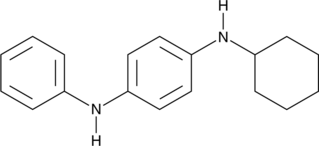
CPPD is a substituted p-phenylenediamine (PPD) and tire rubber antioxidant.1,2 It has been found in road dust, marine sediment, and particulate matter 2.5 (PM2.5) and is considered an environmental contaminant.1,3,4 CPPD has been found in human fluids and tissues, including maternal plasma, cord plasma, and placenta.5 In addition, it has also been found in human urine and positively correlates with serum total and HDL cholesterol levels and mitochondrial DNA copy number variations (mtDNAcns), which is a marker of exposure to environmental stress.6 Embryonic CPPD (0.05 mg/L) exposure reduces growth, disrupts ocular lens development, and induces behavioral abnormalities, including aggression, in zebrafish.2
WARNING This product is not for human or veterinary use.
References & Product Citations
1. A nation-
2. Gut-
3. Occurrences, profiles, and mass inventories of sediment p-
4. Beyond substituted p-
5. Transplacental transfer of p-
6. Alterations of human lipid profile and mitochondrial DNA copy number induced by PPD exposure. Ecotoxicol. Environ. Saf. 307:11947, (2025).
Contact Info
Cayman Chemical1180 East Ellsworth RoadAnn Arbor, Michigan 48108 USAToll Free: (800) 364-9897(USA and Canada only)Fax: (734) 971-3640


