
Technical Support & Resources
Visit our FAQ
Contact Us
Toll Free Phone (USA and Canada Only): (888) 526-5351
Direct Phone: (734) 975-3888
Product Categories
Application
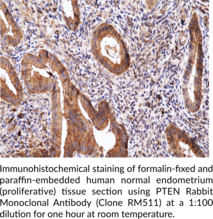

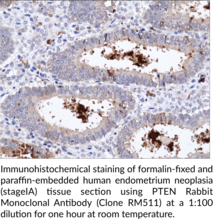


Technical Information
- MMAC1
- Mutated in Multiple Advanced Cancers 1
- Phosphatase and Tensin Homolog
- TEP1
Shipping & Storage Information
Recommended Products
Certificates of Analysis & Batch Specific Data
Provide batch numbers separated by commas to download or request available product inserts, QC sheets, certificates of analysis, data packs, and GC-MS data.
Kinase Resource Center
Discover Products & Resources for Kinase Research
- Kinase inhibitors, screening libraries, assay kits, & more
- Tools to study kinase signaling pathways:
- Growth factor signaling
- PI3K/Akt/mTOR
- MAPKs (ERK, p38, & JNK)
- JAK/STAT signaling
- Articles, resources, & advice
Product Description
Phosphatase and tensin homolog (PTEN) is a tumor suppressor with roles in cell division, cell migration, and apoptosis.1,2,3,4 It is ubiquitously expressed and localized to the cytosol and nucleus where it dephosphorylates phosphatidylinositol-(3,4,5)-triphosphate (PIP3) to phosphatidylinositol-(3,4)-diphosphate (PIP2) to antagonize PI3K signaling and regulates spliceosome assembly and pre-mRNA splicing, respectively.2 PTEN inhibits cell cycle progression and induces apoptosis, as well as inhibits cell adhesion and migration in vitro.5 PTEN deletions have been found in various cancers, including glioblastomas and prostate, breast, and kidney cells. Germline mutations in PTEN induce a variety of syndromes, including Cowden, Bannayan-Riley-Ruvalcaba, Proteus, and Proteus-like syndromes, which are characterized by increased risk of cancers, developmental delays, autism spectrum disorders, and macroencephaly.4 Cayman’s PTEN Rabbit Monoclonal Antibody (Clone RM511) can be used for immunohistochemistry (IHC).
WARNING This product is not for human or veterinary use.
References & Product Citations
1. The multiple roles of PTEN in tumor suppression. Cell 100(4), 387-390 (2000).
2. Multiple roles of PTEN isoforms PTENα and PTENβ in cellular activities and tumor development. Sci. China Life Sci. 62(12), 1722-1724 (2019).
3. An update on PTEN modulators -
4. PI3K pathway defects leading to immunodeficiency and immune dysregulation. J. Allergy Clin. Immunol. 143(5), 1676-1687 (2019).
5. PTEN, a unique tumor suppressor gene. Endocr. Relat. Cancer 7(2), 115-129 (2000).
Contact Info
Cayman Chemical1180 East Ellsworth RoadAnn Arbor, Michigan 48108 USAToll Free: (800) 364-9897(USA and Canada only)Fax: (734) 971-3640


