
Technical Support & Resources
Visit our FAQ
Contact Us
Toll Free Phone (USA and Canada Only): (888) 526-5351
Direct Phone: (734) 975-3888
Product Categories
Research Area
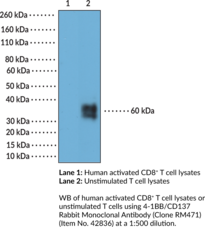
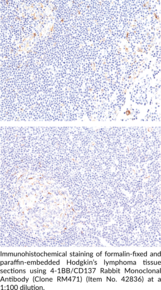
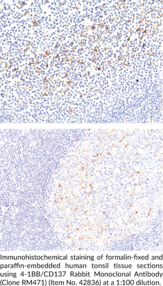
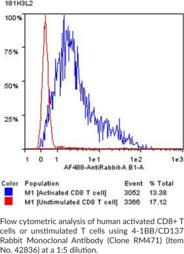
Technical Information
- 4-1BB Ligand Receptor
- CDw137
- ILA
- TNFRSF9
- Tumor Necrosis Factor Receptor Superfamily Member 9
Shipping & Storage Information
Recommended Products
Certificates of Analysis & Batch Specific Data
Provide batch numbers separated by commas to download or request available product inserts, QC sheets, certificates of analysis, data packs, and GC-MS data.

Explore Obesity & Metabolic Disease Resources
Discover high-quality research tools to investigate GLP-1 mechanisms and next-generation metabolic targets.
OBESITY RESEARCH SOLUTIONSProduct Description
4-1BB, also known as CD137, is a type I transmembrane glycoprotein and member of the TNF receptor superfamily with roles in T cell-mediated immunity.1 It is composed of an N-terminal extracellular domain comprising a signaling sequence and four cysteine-rich pseudo repeats (CRDs), a helical transmembrane domain, and a cytoplasmic signaling domain.2 4-1BB is transiently expressed on antigen-primed activated T cells, activated natural killer (NK) cells, and mature dendritic cells. Binding of homotrimeric 4-1BB ligand on antigen-primed T cells induces NF-κB and MAPK signaling through TNF receptor-associated factors (TRAFs) and, when the T cell is co-stimulated by other factors, induces PI3K signaling.3,1 This bidirectional signaling event promotes clonal expansion, differentiation, and survival of T cells, as well as polarizes T helper cells.4 Knockout of Tnfrsf9, the gene encoding 4-1BB, reduces pancreatic islet accumulation of β-cell-autoreactive CD8+ T cells in a mouse model of type 1 diabetes mellitus. Administration of an anti-4-1BB antibody prolongs survival and reverses renal damage, production of autoantibodies, and immune complex deposition in lupus-prone NZB X NZW F1 mice. Cayman’s 4-1BB/CD137 Rabbit Monoclonal Antibody (Clone RM471) can be used for flow cytometry (FC), immunohistochemistry (IHC), and Western blot (WB) applications.
WARNING This product is not for human or veterinary use.
References & Product Citations
1. The TNF–TNFR family of co-
2. Structure of the 4-
3. A novel form of 4-
4. CD137 / CD137 ligand signalling regulates the immune balance: A potential target for novel immunotherapy of autoimmune diseases. J. Autoimmun. 112, 102499 (2020).
Contact Info
Cayman Chemical1180 East Ellsworth RoadAnn Arbor, Michigan 48108 USAToll Free: (800) 364-9897(USA and Canada only)Fax: (734) 971-3640


