
Technical Support & Resources
Visit our FAQ
Contact Us
Toll Free Phone (USA and Canada Only): (888) 526-5351
Direct Phone: (734) 975-3888
Product Categories
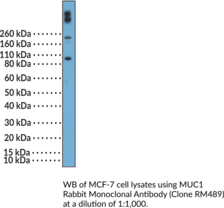


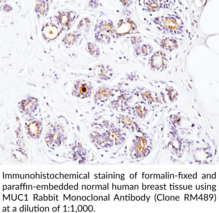
Technical Information
- BM7
- Breast Carcinoma-associated Antigen DF3
- CA 15-3
- Cancer Antigen 15-3
- Mucin 1
- PEM
- Polymorphic Epithelial Mucin
- KL-6
Shipping & Storage Information
Recommended Products
Certificates of Analysis & Batch Specific Data
Provide batch numbers separated by commas to download or request available product inserts, QC sheets, certificates of analysis, data packs, and GC-MS data.
Kinase Resource Center
Discover Products & Resources for Kinase Research
- Kinase inhibitors, screening libraries, assay kits, & more
- Tools to study kinase signaling pathways:
- Growth factor signaling
- PI3K/Akt/mTOR
- MAPKs (ERK, p38, & JNK)
- JAK/STAT signaling
- Articles, resources, & advice
Product Description
Mucin 1 (MUC1) is a member of the mucin family.1 It is expressed as a proprotein that is cleaved into extracellular and transmembrane polypeptides.1,2 The extracellular polypeptide is composed of a tandem repeat domain, which contains O- and N-linked glycosylation sites, and is attached non-covalently to the transmembrane polypeptide, which is composed of a juxtamembrane region, a transmembrane domain, and a C-terminal cytoplasmic tail.1 MUC1 is ubiquitously expressed in tissues, such as stomach peptic cells, organ endothelium and epithelium, and liver bile ducts, and functions as an extracellular barrier, serves as an anchor for intercellular proteins, such as intercellular adhesion molecule-1 (ICAM-1), or associates with other receptors, such as EGFR, to assist in signal transduction.2 MUC1 can undergo alternative splicing to produce secreted or intracellular MUC1 isoforms.3 In tumors, MUC1 prevents immune cell recognition and engagement, increases metastatic potential, and is frequently overexpressed in cancers.3 Serum and tumor levels of MUC1 are increased in patients with breast cancer.4 Cayman's MUC1 Rabbit Monoclonal Antibody (Clone RM489) can be used for immunohistochemistry (IHC) and Western blot (WB) applications.
WARNING This product is not for human or veterinary use.
References & Product Citations
1. MUC1 and metastatic cancer: Expression, function and therapeutic targeting. Cell. Adh. Migr. 7(2), 187-198 (2013).
2. MUC1: The polymorphic appearance of a human mucin. Glycobiology 10(5), 439-449 (2000).
3. Mucins as anti-
4. Tissue and serum MUC1 mucin detection in breast cancer patients. Breast Cancer Res. Treat. 81(3), 195-207 (2003).
Contact Info
Cayman Chemical1180 East Ellsworth RoadAnn Arbor, Michigan 48108 USAToll Free: (800) 364-9897(USA and Canada only)Fax: (734) 971-3640


