
Technical Support & Resources
Information provided in the product description is from published literature. Due to the nature of scientific experimentation, your results (e.g., selectivity and effective concentrations) or specific application for this product may differ. If you have questions about how this product fits your application, please contact our technical support staff.
Visit our FAQ
Contact Us
Toll Free Phone (USA and Canada Only): (888) 526-5351
Direct Phone: (734) 975-3888
Technical Information
Shipping & Storage Information
Recommended Products
Certificates of Analysis & Batch Specific Data
Provide batch numbers separated by commas to download or request available product inserts, QC sheets, certificates of analysis, data packs, and GC-MS data.

Visit Our Cancer Resource Center
Find Tools & Resources to Study the Hallmarks of Cancer
- Cancer cell signaling & regulation
- Cancer metabolism
- Tumor microenvironment
Product Description
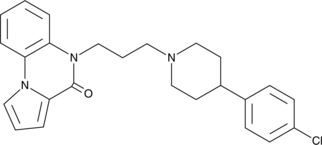
JMS-17-2 is a chemokine (C-X3-C motif) receptor 1 (CX3CR1) antagonist (IC50 = 0.32 nM).1 It is selective for CX3CR1 over CXCR1 and CXCR2 at 1 µM. JMS-17-2 (10 and 100 nM) inhibits the migration of MDA-MB-231 breast cancer cells induced by chemokine (C-X3-C motif) ligand 1 (CX3CL1), also known as fractalkine. It decreases tumor volume in colorectal cancer mouse xenograft models when administered alone or in combination with an anti-programmed cell death protein 1 (anti-PD-1) antibody.2 JMS-17-2 reverses depressive-like behaviors and microglia-mediated excessive synapse pruning in Il15ra-/- mice.3 It decreases mechanical allodynia and spinal microglia M1 polarization in a mouse model of endometriosis.4
WARNING This product is not for human or veterinary use.
References & Product Citations
1. Novel small-
2. Metabolic-
3. IL-
4. CX3CR1/P2X4R signaling-
Contact Info
Cayman Chemical1180 East Ellsworth RoadAnn Arbor, Michigan 48108 USAToll Free: (800) 364-9897(USA and Canada only)Fax: (734) 971-3640


