
Technical Support & Resources
Information provided in the product description is from published literature. Due to the nature of scientific experimentation, your results (e.g., selectivity and effective concentrations) or specific application for this product may differ. If you have questions about how this product fits your application, please contact our technical support staff.
Visit our FAQ
Contact Us
Toll Free Phone (USA and Canada Only): (888) 526-5351
Direct Phone: (734) 975-3888
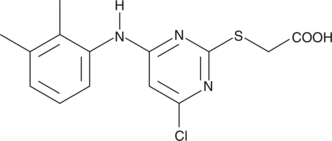
Technical Information
- NSC 310038
- Pirinixic Acid
Shipping & Storage Information
Recommended Products
Certificates of Analysis & Batch Specific Data
Provide batch numbers separated by commas to download or request available product inserts, QC sheets, certificates of analysis, data packs, and GC-MS data.

Explore Obesity & Metabolic Disease Resources
Discover high-quality research tools to investigate GLP-1 mechanisms and next-generation metabolic targets.
OBESITY RESEARCH SOLUTIONSProduct Description
Wy 14643 is an agonist of peroxisome proliferator-activated receptor α (PPARα).1 It selectively transactivates PPARα over PPARγ in a reporter assay using CV-1 mouse fibroblasts when used at a concentration of 100 µM. Wy 14643 (2 mg/kg) decreases distal colon protein levels of IFN-γ, TNF-α, IL-1β, and IL-6 in a mouse model of experimental colitis induced by dextran sulfate sodium (DSS; Item No. 23250).2 Wy 14643 (0.1% w/w in the diet) reduces hepatic triglycerides, leukocyte recruitment, and fibrosis in a mouse model of methionine- and choline-deficient diet-induced steatohepatitis.3
WARNING This product is not for human or veterinary use.
References & Product Citations
1. Peroxisome proliferator-
2. PPARα contributes to colonic protection in mice with DSS-
3. Administration of the potent PPARα agonist, Wy-
Inhibition of hepatic oxalate overproduction ameliorates metabolic dysfunction-
Cyclin D1 represses peroxisome proliferator-
Cyclic stretch facilitates myogenesis in C2C12 myoblasts and rescues thiazolidinedione-
Monascin and ankaflavin act as natural AMPK activators with PPARα agonist activity to down-
Ankaflavin regulates adipocyte function and attenuates hyperglycemia caused by high-
Contact Info
Cayman Chemical1180 East Ellsworth RoadAnn Arbor, Michigan 48108 USAToll Free: (800) 364-9897(USA and Canada only)Fax: (734) 971-3640


